wisemonkeys logo
FeedNotificationProfileManage Forms
FeedNotificationSearchSign in
wisemonkeys logo

Blogs

Dekkers Algorithm

profile
Priti Pandav
Sep 09, 2024
0 Likes
0 Discussions
147 Reads

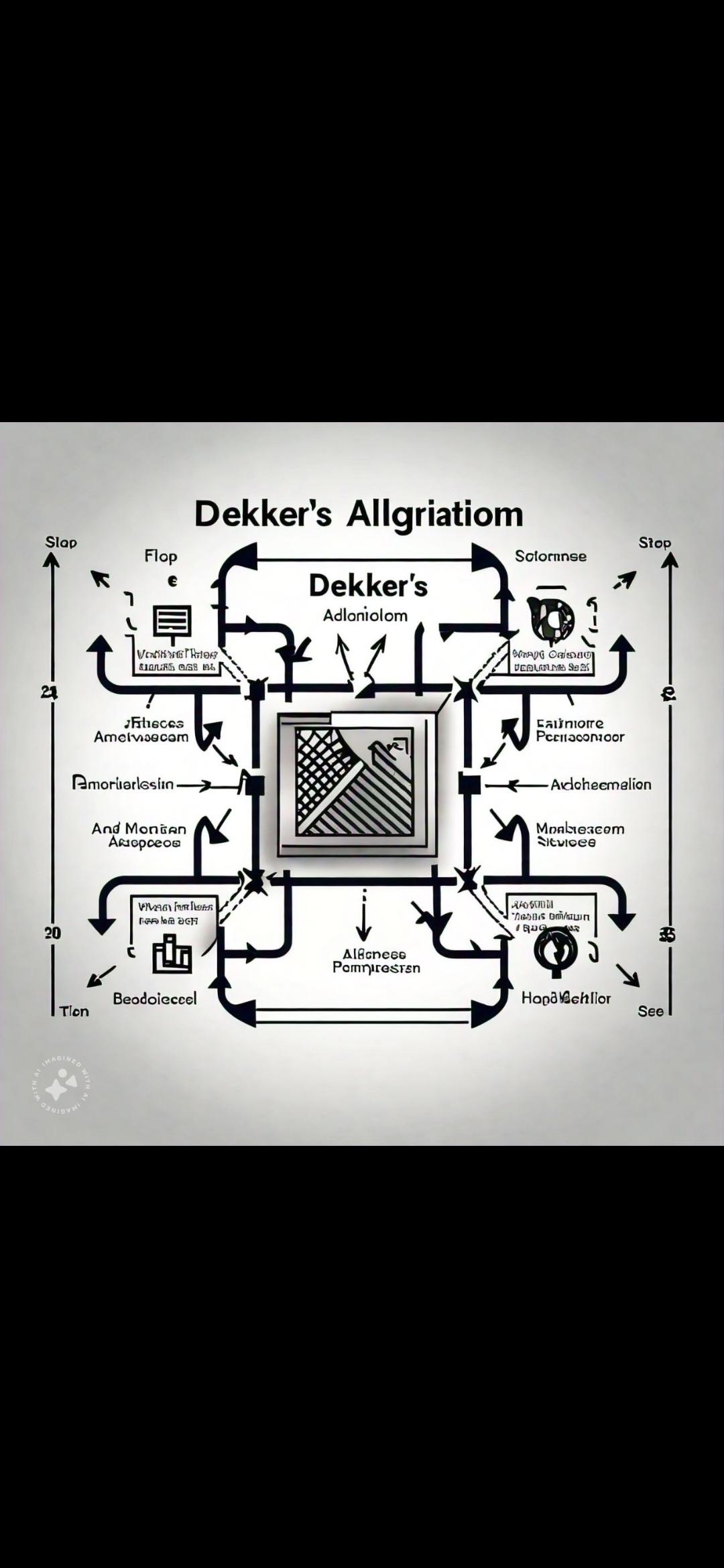
Dekker's Algorithm is a solution to the mutual exclusion problem in computer science. It allows multiple processes to share a common resource without conflicts.


*Problem Statement:*


Two or more processes want to access a shared resource, but only one process can access it at a time.


*Dekker's Algorithm:*


1. Two processes, P0 and P1, want to access the shared resource.

2. Each process has a flag variable (flag0 and flag1) initialized to false.

3. Process P0 sets flag0 to true and checks flag1. If flag1 is true, P0 waits.

4. Process P1 sets flag1 to true and checks flag0. If flag0 is true, P1 waits.

5. If a process finds the other process's flag false, it enters the critical section (accesses the shared resource).

6. After accessing the resource, the process sets its flag to false.


*Key Points:*


1. Dekker's Algorithm ensures mutual exclusion (only one process accesses the resource at a time).

2. It uses flag variables to communicate between processes.

3. A process waits if it finds the other process's flag true.


*Example:*

```

// Process P0

flag0 = true;

while (flag1) { /* wait */ }

// Critical section

flag0 = false;


// Process P1

flag1 = true;

while (flag0) { /* wait */ }

// Critical section

flag1 = false;

```

Dekker's Algorithm is a simple and efficient solution to the mutual exclusion problem, but it has some limitations, such as:


- It only works for two processes.

- It uses busy-waiting, which can waste CPU cycles.


More advanced algorithms, like Peterson's Algorithm and Lamport's Bakery Algorithm, have been developed to address these limitations.



Comments ()


Sign in

Read Next

I Personally

Blog banner

Technical SEO : Total Guide

Blog banner

Virtual machine

Blog banner

Processes: Process Description and Control.

Blog banner

MD5 Collisions and the impact on computer forensics

Blog banner

UniProcessor Scheduling

Blog banner

GIS REMOTE SENSING

Blog banner

SECURITY RISKS OF REMOTE WORKING

Blog banner

Precision-Recall in Data Science

Blog banner

Starvation

Blog banner

Pilgrimage at LOC: A privilege and a paradox

Blog banner

Benefits of Yoga

Blog banner

Stories Woven in Silk: The Meaning Behind Patola Motifs

Blog banner

Direct Memory Access

Blog banner

Social Media Sentiment Analysis

Blog banner

Virtual Memory

Blog banner

Evolution of Operating System

Blog banner

Race Condition in Operating Theatre

Blog banner

Social engineering in cyber security

Blog banner

KEAP MANAGEMENT SYSTEM

Blog banner

Direct Memory Access

Blog banner

Deadlock

Blog banner

URL vs Domain

Blog banner

INTERNET

Blog banner

Data Security and Data Privacy in Data Science

Blog banner

RAID_142

Blog banner

Service Design Model

Blog banner

LINUX VSERVER VIRTUAL MACHINE ARCHITECTURE

Blog banner

DIGITAL TECHNOLOGY

Blog banner

Super Garlicky Tomato Soup with Smashed White Beans

Blog banner

Modern Operating system

Blog banner

The Khan mehtab transforming the modular switches

Blog banner

Deadlock and Starvation

Blog banner

Study of Backdoor and Trojan tools

Blog banner

Os Virtual Memory

Blog banner

Buffer Overflow

Blog banner

Scala - a programming tool

Blog banner

Security issues in Sensor Networks and gathering admissible evidence in Network Forensics

Blog banner

Interrupts in operating system.

Blog banner

IOT- Internet Of Things

Blog banner

Importance Of Time

Blog banner

Apache Kafka

Blog banner