wisemonkeys logo
FeedNotificationProfileManage Forms
FeedNotificationSearchSign in
wisemonkeys logo

Blogs

Memory Management in an Operating System

profile
Amit Wala
Jul 05, 2024
0 Likes
0 Discussions
137 Reads

Memory Management

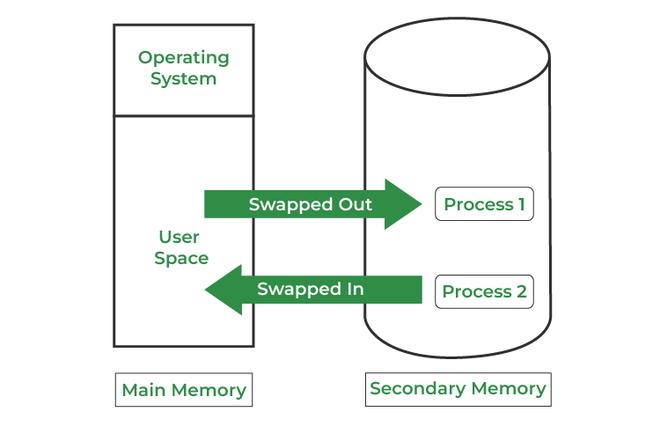
Memory management in OS is a technique of controlling and managing the functionality of Random access memory (primary memory). It is used for achieving better concurrency, system performance, and memory utilization.

Memory management in operating systems involves allocating and deallocating memory resources efficiently to optimize system performance. It includes tasks such as memory allocation, tracking which parts of memory are currently in use, and freeing up memory when it is no longer needed.

 Effective memory management is crucial for ensuring stability, responsiveness, and overall efficiency of computer systems.

Logical Address Space and Physical Address Space

In the realm of memory management, distinguishing between logical address space and physical address space is paramount:-

Logical Address Space encompasses the range of addresses that a CPU can generate. This is the perspective from which a program "sees" its memory. For instance, if a computer has 4 GB of RAM, the logical address space might span from 0 to 4 billion. However, it's important to note that this space is not entirely occupied by physical memory. Instead, it serves as a convenient and abstract representation.

Physical Address Space, on the other hand, is the actual physical location in the memory hardware where data is stored. It constitutes the tangible address of a storage cell in RAM. In our previous example, if the RAM modules consist of 4 billion cells, the physical address space would correspond to each of these individual cells.

Example: Consider a scenario where a program attempts to access memory address 'a' in its logical address space. The MMU translates this to the corresponding physical address 'b' and retrieves the data from the actual RAM location. This abstraction allows for efficient multitasking and memory allocation.



Comments ()


Sign in

Read Next

Bitcoin sent using radio waves! No internet!

Blog banner

Unlocking Success: Mastering Google Ads Strategies

Blog banner

The IT Service Lifecycle

Blog banner

GIS in Mapping and landslide alert in Bangladesh

Blog banner

FIREWALL

Blog banner

Hubspot

Blog banner

Virtual Machine

Blog banner

Smartphone Security: Vulnerabilities and Attacks

Blog banner

CyberSecurity Color Wheel

Blog banner

Linux Memory Management

Blog banner

GIS

Blog banner

Amazon

Blog banner

Data Security and Data Privacy in Data Science

Blog banner

Sessions In OS.

Blog banner

Earth with no trees

Blog banner

ACHIEVEMENTS IN OPERATING SYSTEMS

Blog banner

Computer security techniques

Blog banner

Networking 101: How to Build Meaningful Connections in College

Blog banner

Apache Spark :- Powerful Data Processing Tool

Blog banner

A Short History of GIS

Blog banner

Evolution of Operating system

Blog banner

Smart Shoephone: Is that technology overdose!?

Blog banner

Cybersecurity Standards for Automotive

Blog banner

IT security management

Blog banner

Memory management

Blog banner

Trello ( management software)

Blog banner

DMZ: Your Secret Weapon for Data Security

Blog banner

The Procedural Framework for Corporate High-Tech Investigations

Blog banner

Routers

Blog banner

Operating Systems

Blog banner

The New Dr. Frankenstein who will perform first full head transplant

Blog banner

Raid

Blog banner

Be you

Blog banner

Telegram and it's features

Blog banner

Sage business cloud accounting

Blog banner

Smart Homes | Zigbee Alliance

Blog banner

Dekkers Algorithm

Blog banner

Microsoft Word

Blog banner

security requirements for safe e-payment

Blog banner

Yoga in INDIA and ABROAD

Blog banner

geographic information system (GIS)

Blog banner

Virtual machine.

Blog banner