
wisemonkeys logo
FeedNotificationProfileManage Forms
FeedNotificationSearchSign in
wisemonkeys logo

Blogs

Interrupts - Types, Working & Importance

profile
Aditya Pai
Sep 09, 2024
0 Likes
0 Discussions
162 Reads

INTRODUCTION TO INTERRUPTS


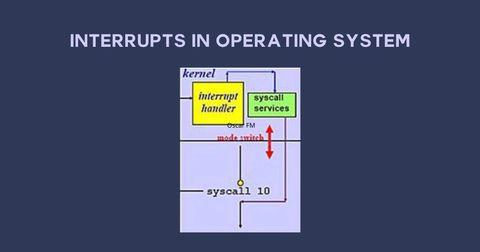
Interrupts are a fundamental concept in operating systems (OS) that enable efficient and responsive computing. An interrupt is a signal sent to the processor by hardware or software indicating an event that needs immediate attention. When an interrupt occurs, the operating system temporarily halts the current processes, saves their state, and executes an interrupt service routine (ISR) to handle the event. Once the ISR is completed, the OS restores the original processes and resumes their execution.


TYPES OF INTERRUPTS


Hardware Interrupts :

These are generated by hardware devices like keyboards, mice, disk drives, or network cards to signal events such as key presses, mouse movements, or data arrival. Hardware interrupts ensure that the processor can respond to hardware events promptly, without the need for constant polling by the CPU.


Software Interrupts :

Software interrupts, also known as traps, are generated by programs or the operating system itself. They can be used to handle exceptional conditions (e.g., division by zero), system calls, or to implement multitasking by switching processes.


INTERRUPT HANDLING PROCESS


  1. An interrupt request (IRQ) is generated by a hardware device or software.
  2. The CPU acknowledges the interrupt and determines its priority.
  3. The CPU uses an interrupt vector to locate the appropriate ISR.
  4. The ISR executes to handle the interrupt. This may involve reading data from a device, processing input, or signaling other processes.
  5. The CPU restores the state of the interrupted process and resumes its execution.


IMPORTANCE OF INTERRUPTS


Efficiency :

Interrupts enable efficient CPU utilization by allowing the processor to execute other tasks while waiting for I/O operations to complete. This reduces idle time and enhances overall system performance.


Responsiveness :

Interrupts allow the system to respond to events in real-time. For instance, a keystroke on a keyboard generates an interrupt, ensuring immediate attention from the CPU, resulting in low latency and improved user experience.


Multitasking and Concurrency :

Interrupts are crucial for multitasking environments. They facilitate context switching, where the CPU transitions between different processes or threads, allowing multiple tasks to run concurrently and improving the responsiveness of the system.



Comments ()


Sign in

Read Next

'Positivity in life'

Blog banner

Security in Cloud Computing

Blog banner

Smartphone Security: Vulnerabilities and Attacks

Blog banner

Odoo

Blog banner

BUSINESS MODELS OF E COMMERCE

Blog banner

The Evolution of the Microprocessor ~ Aditya Pai

Blog banner

Modern Operating System

Blog banner

BUFFER OVERFLOW_142

Blog banner

The New Dr. Frankenstein who will perform first full head transplant

Blog banner

Clustering Techniques

Blog banner

E-learning in today's world

Blog banner

Evolution of the Microprocesor

Blog banner

Benefits of yoga and meditation

Blog banner

Socket Programming in Java

Blog banner

Reconnaissance

Blog banner

The Role of Data Provenance and Lineage in Modern Data Science

Blog banner

How to Prepare Your Child for Their First Day of School?

Blog banner

Modern Operating System

Blog banner

OS Assignment 3

Blog banner

Types of threads

Blog banner

Operating System

Blog banner

Riddhi Miyani 53003220140

Blog banner

Data Security must be your Priority!

Blog banner

Steganography and Steganalysis

Blog banner

Linux VServer Architecture

Blog banner

Linux -V Server Virtual Machine

Blog banner

Disk scheduling

Blog banner

Mumbaicha Dabbawalla

Blog banner

A book review

Blog banner

Unlocking Success: Mastering Google Ads Strategies

Blog banner

ROLE OF THE COMPUTER FORENSICS TOOLS AND TECHNIQUES

Blog banner

Social engineering in cyber security

Blog banner

Deming’s Process

Blog banner

Virtual Machine

Blog banner

Blog on health and fitness

Blog banner

Race Condition in Operating Theatre

Blog banner

Method of Evaluating Information Security Level in an Organization

Blog banner

Deadlock and starvation

Blog banner

Excel records

Blog banner

MEMORY MANAGEMENT

Blog banner

Cache memory

Blog banner

Apple

Blog banner