wisemonkeys logo
FeedNotificationProfileManage Forms
FeedNotificationSearchSign in
wisemonkeys logo

Blogs

VIRTUAL MACHINES

profile
Krisha Bhankharia
Jul 11, 2023
0 Likes
0 Discussions
56 Reads

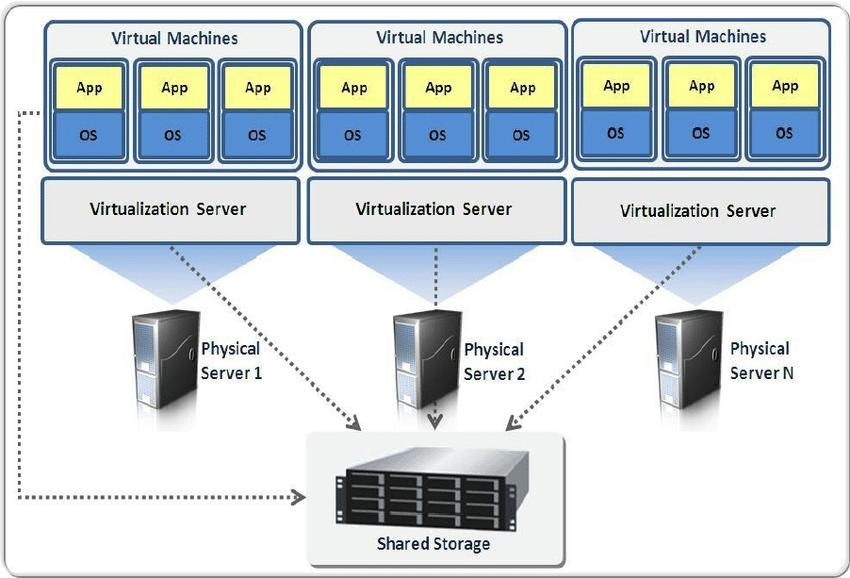
Virtualization is a technology that allows a single computer or server to run multiple operating systems or sessions of a single OS simultaneously. It provides a way to optimize hardware usage and enables businesses and individuals to deal with legacy applications effectively.

In virtualization, a virtual machine monitor (VMM) or hypervisor is used to manage and support virtual machines (VMs). The VMM runs on top of or is incorporated into the host operating system. Each VM emulates hardware devices and can run a separate operating system. The VMM handles the communication between each OS and the underlying hardware, such as the processor, storage medium, and network.

Virtual machines can communicate with each other through virtualized network connections when necessary. This allows different applications running on different operating systems to coexist on a single platform.

There are two main approaches to virtual machine architecture: process virtual machines and system virtual machines.

  1. Process Virtual Machine: A process virtual machine presents an Application Binary Interface (ABI) to an application process. It translates instructions from one platform to another, providing cross-platform portability. Process virtual machines are typically part of a high-level language (HLL) application environment and are created and terminated with the process itself. Examples of process virtual machines include the Java VM architecture and the Microsoft Common Language Infrastructure (.NET framework).
  2. System Virtual Machine: In a system virtual machine, virtualizing software translates the Instruction Set Architecture (ISA) used by one hardware platform to that of another. The virtualizing software is host to multiple guest operating systems, each running in its own VM. The virtual machine monitor (VMM) emulates the hardware ISA to enable execution of different ISAs on the host system. This approach allows a single hardware platform to support multiple isolated guest OS environments simultaneously. System virtual machines provide benefits such as application portability, support for legacy systems, and enhanced security through isolation of guest environments.

A variant of system virtual machines is the hosted VM, where the VMM is built on top of an existing host operating system. The hosted VM relies on the host OS for device drivers and lower-level services. An example of a hosted VM is the VMware GSX server.

Virtualization technologies offered by companies like VMware and Microsoft are widely used in server and desktop environments to run multiple operating systems efficiently and maximize hardware utilization.



Comments ()


Sign in

Read Next

Data Science in Mental Health Prediction

Blog banner

WINDOWS I/ O

Blog banner

Jamming Attacks in Network Security: Disrupting Communication Signals

Blog banner

Modern operating system

Blog banner

Direct Memory Access

Blog banner

ITIL Version 3 and 4 differenciation?

Blog banner

KPMG (Klynveld Peat Marwick Goerdeler)

Blog banner

Smitten Kitchen Keepers

Blog banner

Pooja Silver

Blog banner

Threads

Blog banner

Multicore and Multithreading

Blog banner

Types of Hackers.

Blog banner

Denial-of-Service and Distributed Denial-of-Service Attack Techniques

Blog banner

The Dark Web: A Breeding Ground for Cybercriminals – How to Guard Against Threats

Blog banner

Super Garlicky Tomato Soup with Smashed White Beans

Blog banner

De-Coding Love

Blog banner

Memory management and virtual memory

Blog banner

My First Dream Bike

Blog banner

Current Trends in GIS and Remote Sensing(Ocean Applications)

Blog banner

Deadlock in operating system

Blog banner

Boxing

Blog banner

Virtual Machine

Blog banner

Install Ubuntu Easily

Blog banner

Getting to Kashmir: Alternative to the Jammu-Srinagar highway

Blog banner

Virtual memory in os

Blog banner

Sniffing: A Cyber Security Threat

Blog banner

Guidelines for a Low sodium Diet.

Blog banner

DATA BREACH CAUSES CHALLENGES PREVENTION AND FUTURE DIRECTIONS

Blog banner

Different memory allocation strategies

Blog banner

Modern operating system

Blog banner

Data Visualization in Decision-Making

Blog banner

The Impact of Tolerances and Wall Thickness on Pipeline Integrity

Blog banner

Starvation and Deadlock.

Blog banner

PODIO

Blog banner

Deadlock

Blog banner

Cache Memory(142)

Blog banner

Population

Blog banner

The Art of Slow Fashion: Why Patola Defines Sustainable Luxury

Blog banner

Street foods

Blog banner

Types of Viruses

Blog banner

Virtual Machine's

Blog banner

Proton mail

Blog banner