wisemonkeys logo
FeedNotificationProfileManage Forms
FeedNotificationSearchSign in
wisemonkeys logo

Blogs

STARVATION

profile
Krish Kaunder
Aug 15, 2024
0 Likes
0 Discussions
49 Reads

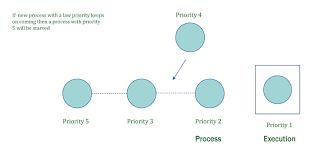
In operating systems, starvation (or indefinite blocking) refers to a situation where a process is perpetually denied access to resources it needs to make progress, even though the resources are available. This typically happens in systems that use scheduling algorithms for resource allocation.


Causes of Starvation:

1. Priority Scheduling: If a scheduling algorithm always favors higher-priority processes, lower-priority processes might be starved of CPU time.

2. Resource Allocation: When a process holds resources while waiting for others, and other processes keep grabbing the resources it needs, the process can end up waiting indefinitely.

3. Long Wait Queue: In some scheduling systems, processes at the end of the queue might never get a chance to execute if new processes keep arriving and getting added to the front of the queue.


Example:

Consider a system using a priority-based scheduling algorithm where high-priority processes are always chosen over low-priority ones. If high-priority processes keep entering the system, a low-priority process may never get CPU time, leading to starvation.


Solutions to Starvation:

1. Aging: Gradually increasing the priority of a waiting process over time, ensuring that it eventually gets scheduled.

2. Fair Resource Allocation: Ensuring that every process gets a fair share of resources, perhaps by implementing round-robin or time-sharing scheduling.

3. Deadlock Detection: vIdentifying potential deadlocks and resolving them, as deadlocks can lead to starvation in some cases. 


Starvation is a significant issue in operating systems and resource management algorithms, as it can lead to inefficiency and poor system performance.



Comments ()


Sign in

Read Next

SQL Injection

Blog banner

Deadlocks

Blog banner

Modern operating system

Blog banner

Zero Trust Security Model: Revolutionizing Cybersecurity in the Digital Age

Blog banner

Why we fail after giving 100% ?

Blog banner

Cyber Security Standards

Blog banner

JIRA SOFTWARE

Blog banner

Security Breaches in Stock market trading

Blog banner

Why Soft Skills Matter as Much as Grades?

Blog banner

Define Instagram.

Blog banner

INTERNET

Blog banner

R Programming

Blog banner

This too shall pass

Blog banner

Steps to create an Ubuntu EC2 Instance with GUI in AWS

Blog banner

WomenEmpowerment

Blog banner

Importance Of Time

Blog banner

Why Data Security Is Important

Blog banner

Never give up

Blog banner

Fitness

Blog banner

Direct Memory Access

Blog banner

How to grow followers on Instagram business account?

Blog banner

Cyber Forensics on IOT Devices

Blog banner

LIFEHACKER

Blog banner

Virtual Memory

Blog banner

My favourite food

Blog banner

Cyber Forensics in a Ransomware Attack Recovery

Blog banner

Decoding the Weave — How to Identify Original Patola Art on a Fabric

Blog banner

Simple STEM Activities for Toddlers That Spark Curiosity

Blog banner

How To Secure Operating Systems ?

Blog banner

What do you mean by online marketing and why do you need to know about it

Blog banner

Cache Memory

Blog banner

Subnet Masking

Blog banner

Characteristics of Etherum

Blog banner

Importance of internet

Blog banner

Memory managment

Blog banner

(Input/Output) in os

Blog banner

Virtual Memory

Blog banner

A Heartfelt Act of Kindness

Blog banner

MODERN OPERATING SYSTEM

Blog banner

Risk mitigation and management

Blog banner

Rules and Regulations of Networking: "Standards and Protocols" - Part 2

Blog banner

computer security

Blog banner