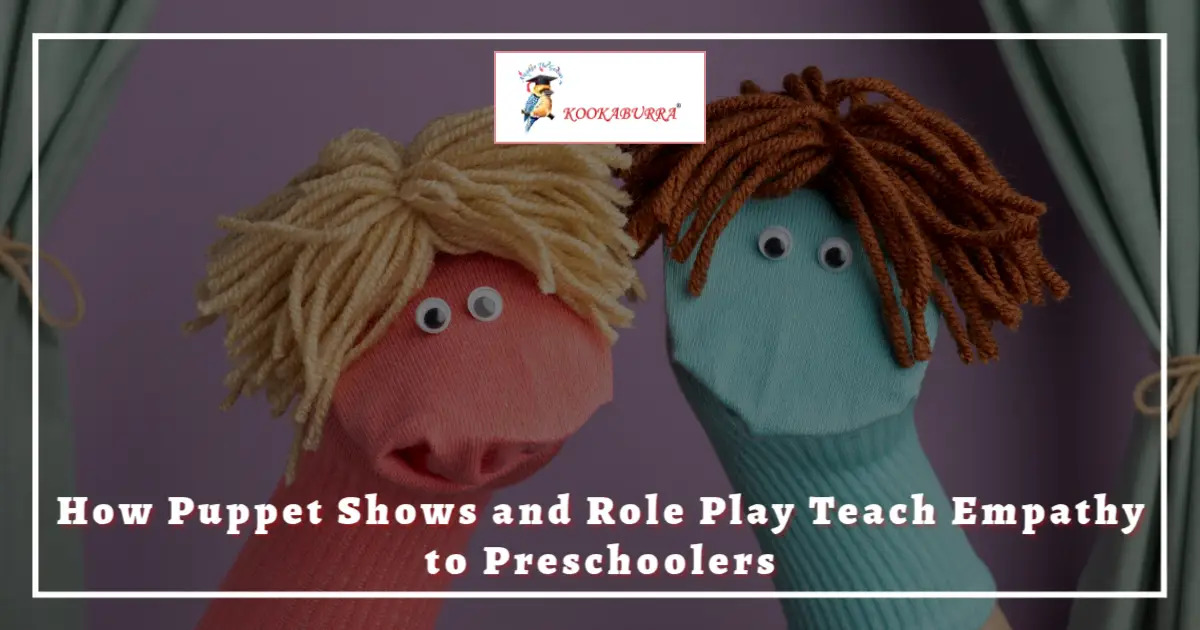
If you have ever seen a classroom of preschoolers sitting with wide eyes during a puppet show, you have witnessed the power of storytelling at work. Puppets, pretend play, and role-playing are not activities simply played for enjoyment. They are tools of great power that instruct children in the way of feelings, viewpoints, and being kind — that is, they teach empathy.
Empathy is seeing the world from another person’s perspective and feeling what they feel. In young children, this is a skill that evolves over time. In the preschool years, children are egocentric. They are learning to share, wait their turn, and regulate feelings. Puppetry and role-playing fill in this emotional space by making concepts concrete through experiences children can identify with.
Puppets enable children to communicate feelings indirectly. A child who struggles with the expression “I am sad” can readily make a puppet express it for them. By projection, they can identify and label feelings in a secure, playful manner. By witnessing a puppet feeling left out, angry, or happy, children start identifying those same feelings in themselves and others.
By using basic stories, puppet performances teach children about friendship, fairness, and problem-solving. For instance, a story of a puppet being taught to apologise or sharing games makes children relate to the lesson emotionally. It is learning by the heart and not by instructions.
Pretend play is another great empathy builder. As children play doctor, teacher, or shopkeeper, they start to fantasise about what it’s like to be in someone else’s shoes. A child pretending to be a doctor learns how to take care of someone, while a child playing a teacher knows what it’s like to teach someone something. These are the kind of experiences that build perspective-taking, which is the root of empathy.
Role play also creates cooperation. Kids must communicate, listen, and accommodate to the roles. They learn that what they do has an impact on others and that being nice makes everyone enjoy the play more.
Both role play and puppetry bring emotions to life in a manner that children can interpret. When a puppet weeps because its friend has gone away or a child imagines soothing a crying teddy bear, they are not merely playing — they are learning empathy. These experiences come out in real-life behaviour over time. Children begin by observing simple emotions like: when a friend is sad, wanting security by hugging them, or waiting for their turn in play.
Puppet shows and role play are highly recommended for parents and teachers to channelise emotional learning smoothly. A brief puppet tale during an evening snack time can teach the child about sharing, while classroom pretend play can assist children in managing conflict or friendship.
We enjoy teaching at Kookaburra Preschool through stories, imagination, and obviously play. Our learning schedule is full of possibilities for children to express and to be understood. With the aid of puppet performances, story corners, and facilitated role play in school premises, we not only encourage preschoolers to become kind and understanding but also confident learners.