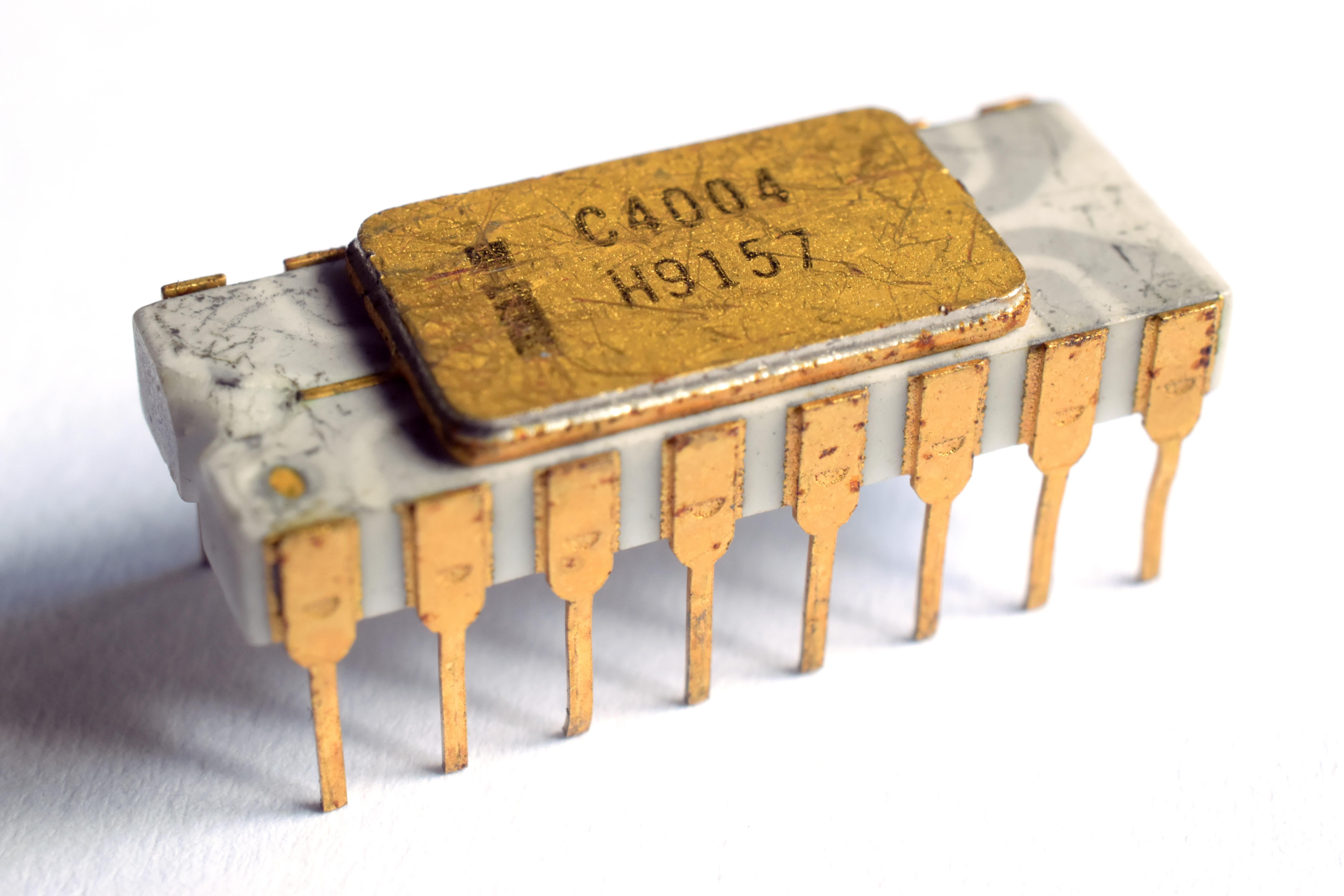
The first microprocessor came to life in 1971 with the release of the Intel 4004, the world's first commercially available microprocessor. This microprocessor processed only 4-bits at a time and contained just 2,300 transistors. It was specifically designed for use in calculators such as the Busicom 141-P4 Calculator and other simple electronic devices. This first-generation microprocessor marked the start of a technological revolution that would continue to unfold over the following decades.
The second generation of microprocessors, announced in the mid-1970s, brought in the 8-bit processors like the Intel 8008 and 8080. These processors were capable of more complex arithmetic and logical operations, allowing the creation of more sophisticated electronic devices. The Intel 8080 microprocessor was used in the Altair 8800, one of the first personal computers.
The third generation, which emerged in the late 1970s, saw the introduction of the 16-bit microprocessors, such as the Intel 8086 and Motorola 68000. These processors were smaller, faster, and more reliable than their second-generation counterparts. These processors powered workstations like the Apple Lisa. They also consumed less power and produced less heat, increasing efficiency.
The fourth generation, which spanned across 1980s and early 1990s, saw the introduction of 32-bit microprocessors, including the Intel 80386 and 80486. These processors had more enhanced performance as compared to their predecessor due to the addition of features like cache memory which laid the foundation for the modern home personal computer.
The fifth generation, which began in the mid-1990s and continues to this day, is marked by the rise of 64-bit microprocessors, such as the Intel Pentium and AMD Athlon. These processors, with their huge processing power and multimedia capabilities, have enabled the development of powerful desktop and server computers used for gaming and multimedia applications.
Over time, the microprocessor has become more and more complex, with the number of transistors on a single chip growing a lot. Today, modern microprocessors can have billions of transistors, which allows them to do a wide range of tasks really fast and efficiently. This quick progress has led to the development of many electronic devices, from smartphones and laptops to medical equipment and industrial automation systems, all of which depend on the power of the microprocessor.
As we look to the future, the evolution of the microprocessor will continue, with advancements in areas such as artificial intelligence, quantum computing, etc. Once considered basic, the microprocessor now plays a crucial role in our society.