FIRST GENERATION MICROPROCESSORS
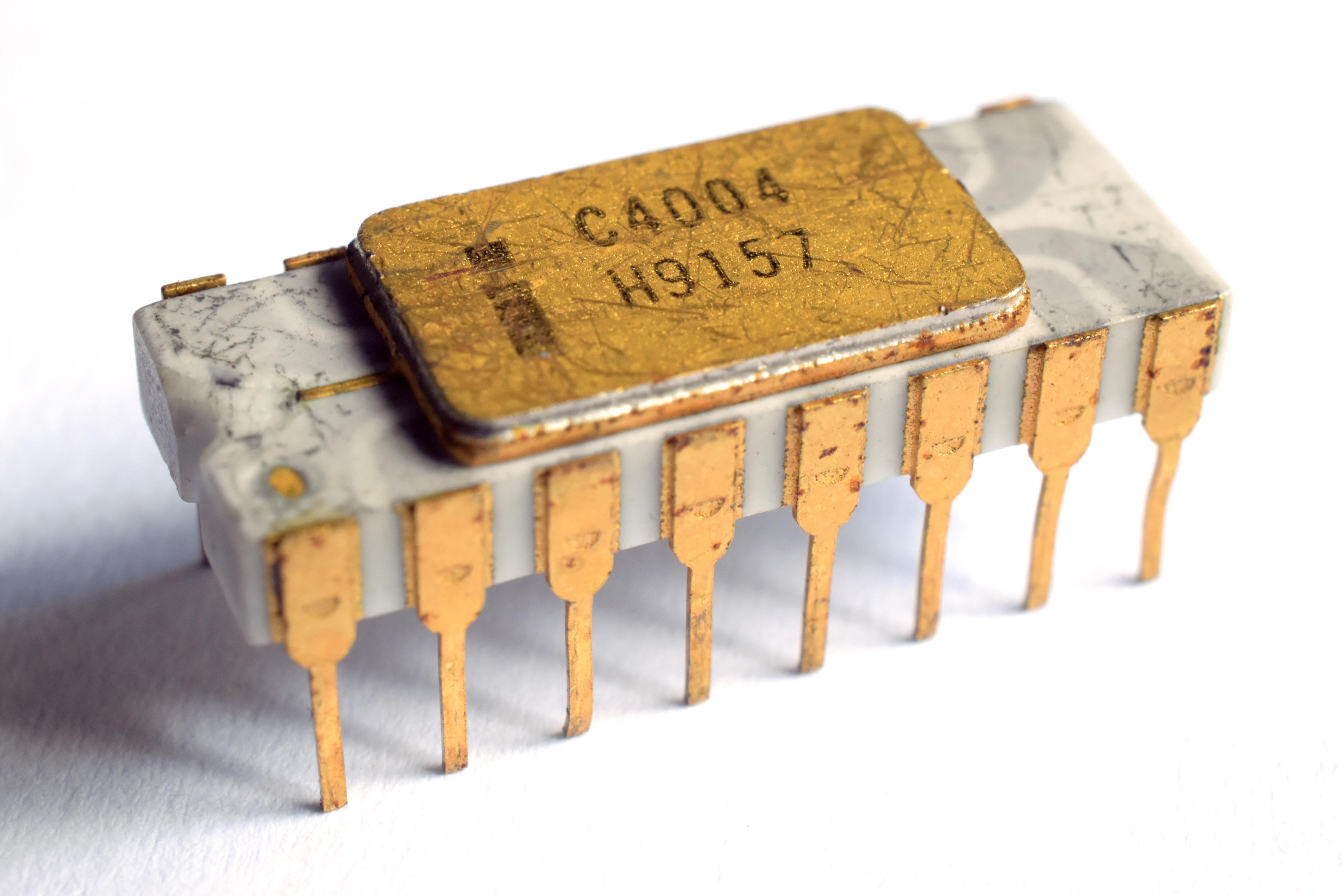
The first microprocessor was invented in the year 1971. It was named the Intel 4004 and it was the first commercially available microprocessor. It processed only 4-bits at a time and contained only 2,300 transistors. It was used in simple calculators and other electronic devices. One of these applications was the Busicom 141-P4 Calculator. This was the first step in the journey which has brought us into this era of technology.
SECOND GENERATION MICROPROCESSORS
The mid-1970s saw the introduction of the second-generation microprocessors. These included microprocessors like the Intel 8008 and Intel 8080. These were 8-bit processor and hence allowed for solving more complex arithmetic and logical operations. The Intel 8080 was used in Altair 8800 which was one of the first personal computers.
THIRD GENERATION MICROPROCESSORS
The third-generation microprocessors were brought in the late 1970s. These included microprocessors like the Intel 8086 and the Motorola 68000. The bit processing kept improving from generation to generation and had now doubled to 16-bits. As a result, the processors were smaller, faster and more reliable. They also consumed less power and produced less heat. The 68000 powered the Apple Lisa, the first personal computer with a graphical user interface.
FOURTH GENERATION MICROPROCESSORS
The 1980s and early 1990s is considered to be the decade of fourth generation microprocessors. The Intel 80386 and 80486 are some examples. These were 32-bit microprocessors, further improving performance. The processors brought in new features like cache memory which is an integral part of modern computers.
FIFTH GENERATION MICROPROCESSORS
The processors we use to this day are referred to as fifth generation microprocessors. These were introduced in the mid-1990s and included processors such as the Intel Pentium and AMD Athlon. These were 64-bit microprocessors. These processors have more than 1 million transistors, a serious jump from the 2,300 in the first generation processors. These processors have advanced multimedia capabilities, which has allowed for the development of powerful computers used for gaming and multimedia applications.
CONCLUSION
From this evolution, we can conclude that the microprocessor has come a long way since its inception. We can see a significant improvement in performance, size, quality and prices by taking into consideration factors like bit processing power, number of transistors, number of manufacturing plants, etc. This progress has allowed for the development of innumerable electronic devices around us such as laptops, smartphones, smartwatches as well as medical equipment and industrial systems. The future of microprocessors seems bright with advancements in areas such as artificial intelligence, quantum computing, etc. and going forward, it will continue to play an important part in our live.
Wriiten by: Aditya Pai - 53003230098