Moore’s Law says that computer hardware improves by a factor of 100 every decade. Nobody has a law saying that operating systems improve by a factor of 100 every decade. Or even get better at all. In fact, a case can be made that some of them are worse in key respects (such as reliability) than UNIX Version 7 was back in the 1970s.
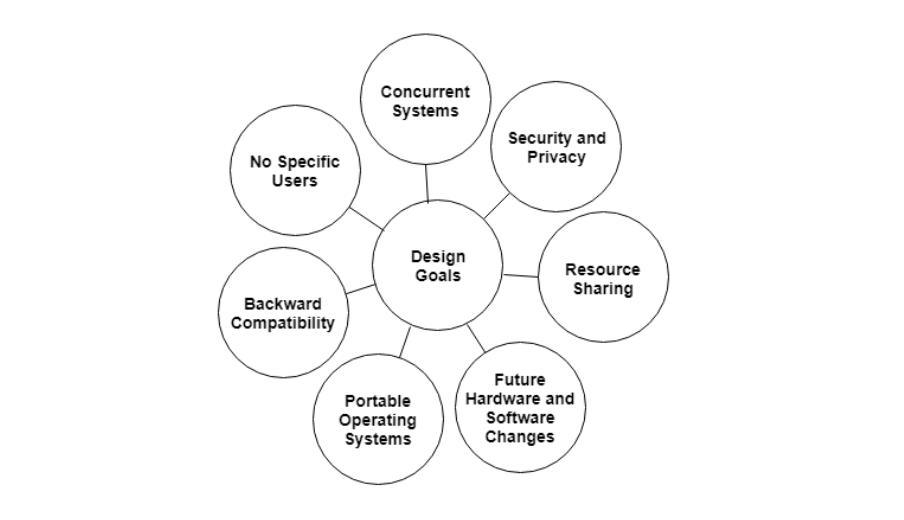
Why? Inertia and the desire for backward compatibility often get much of the blame, and the failure to adhere to good design principles is also a culprit. But there is more to it. Operating systems are fundamentally different in certain ways from small application programs you can download for $49. Let us look at eight of the issues that make designing an operating system much harder than designing an application program.
First, operating systems have become extremely large programs. No one person can sit down at a PC and dash off a serious operating system in a few months. Or even a few years. All current versions of UNIX contain millions of lines of code; Linux has hit 15 million, for example. Windows 8 is probably in the range of 50–100 million lines of code, depending on what you count (Vista was 70 million, but changes since then have both added code and removed it). No one person can understand a million lines of code, let alone 50 or 100 million. When you have a product that none of the designers can hope to fully understand, it should be no surprise that the results are often far from optimal.
Operating systems are not the most complex systems around. Aircraft carriers are far more complicated, for example, but they partition into isolated subsystems much better. The people designing the toilets on a aircraft carrier do not have to worry about the radar system. The two subsystems do not interact much. There are no known cases of a clogged toilet on an aircraft carrier causing the ship to start firing missiles. In an operating system, the file system often interacts with the memory system in unexpected and unforeseen ways.
Second, operating systems have to deal with concurrency. There are multiple users and multiple I/O devices all active at once. Managing concurrency is inherently much harder than managing a single sequential activity. Race conditions and deadlocks are just two of the problems that come up.
Third, operating systems have to deal with potentially hostile users—users who want to interfere with system operation or do things that they are forbidden from doing, such as stealing another user’s files. The operating system needs to take measures to prevent these users from behaving improperly. Word-processing programs and photo editors do not have this problem.
Fourth, despite the fact that not all users trust each other, many users do want to share some of their information and resources with selected other users. The operating system has to make this possible, but in such a way that malicious users cannot interfere. Again, application programs do not face anything like this challenge.
Fifth, operating systems live for a very long time. UNIX has been around for 40 years. Windows has been around for about 30 years and shows no signs of vanishing. Consequently, the designers have to think about how hardware and applications may change in the distant future and how they should prepare for it. Systems that are locked too closely into one particular vision of the world usually die off.
Sixth, operating system designers really do not have a good idea of how their systems will be used, so they need to provide for considerable generality. Neither UNIX nor Windows was designed with a Web browser or streaming HD video in mind, yet many computers running these systems do little else. Nobody tells a ship designer to build a ship without specifying whether they want a fishing vessel, a cruise ship, or a battleship. And even fewer change their minds after the product has arrived.
Seventh, modern operating systems are generally designed to be portable, meaning they hav e to run on multiple hardware platforms. They also have to support thousands of I/O devices, all of which are independently designed with no regard to one another. An example of where this diversity causes problems is the need for an operating system to run on both little-endian and big-endian machines. A second example was seen constantly under MS-DOS when users attempted to install, say, a sound card and a modem that used the same I/O ports or interrupt request lines. Few programs other than operating systems have to deal with sorting out problems caused by conflicting pieces of hardware.
Eighth, and last in our list, is the frequent need to be backward compatible with some previous operating system. That system may have restrictions on word lengths, file names, or other aspects that the designers now reg ard as obsolete, but are stuck with. It is like converting a factory to produce next year’s cars instead of this year’s cars, but while continuing to produce this year’s cars at full capacity