wisemonkeys logo
FeedNotificationProfileManage Forms
FeedNotificationSearchSign in
wisemonkeys logo

Blogs

Multiple processor scheduling

profile
Vaibhav Gohil
Aug 14, 2024
0 Likes
0 Discussions
228 Reads

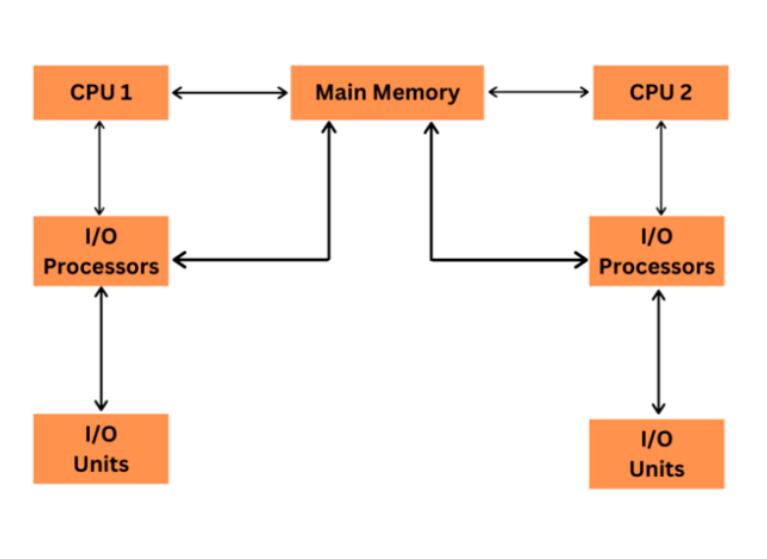
Multiple processor scheduling or multiprocessor scheduling focuses on designing the system's scheduling function, which consists of more than one processor. Multiple CPUs share the load (load sharing) in multiprocessor scheduling so that various processes run simultaneously. In general, multiprocessor scheduling is complex as compared to single processor scheduling. In the multiprocessor scheduling, there are many processors, and they are identical, and we can run any process at any time.

The multiple CPUs in the system are in close communication, which shares a common bus, memory, and other peripheral devices. So we can say that the system is tightly coupled. These systems are used when we want to process a bulk amount of data, and these systems are mainly used in satellite, weather forecasting, etc.


Approaches to Multiple Processor Scheduling

There are two approaches to multiple processor scheduling in the operating system: Symmetric Multiprocessing and Asymmetric Multiprocessing.

  1. Symmetric Multiprocessing: It is used where each processor is self-scheduling. All processes may be in a common ready queue, or each processor may have its private queue for ready processes. The scheduling proceeds further by having the scheduler for each processor examine the ready queue and select a process to execute.
  2. Asymmetric Multiprocessing: It is used when all the scheduling decisions and I/O processing are handled by a single processor called the Master Server. The other processors execute only the user code. This is simple and reduces the need for data sharing, and this entire scenario is called Asymmetric Multiprocessing.


Types of Multiprocessor Scheduling Algorithms


Round-Robin Scheduling − The round-robin scheduling algorithm allocates a time quantum to each CPU and configures processes to run in a round-robin fashion on each processor. Since it ensures that each process gets an equivalent amount of CPU time, this strategy might be useful in systems wherein all programs have the same priority.

Priority Scheduling − Processes are given levels of priority in this method, and those with greater priorities are scheduled to run first. This technique might be helpful in systems where some jobs, like real-time tasks, call for a higher priority.

Scheduling with the shortest job first (SJF) − This algorithm schedules tasks according to how long they should take to complete. It is planned for the shortest work to run first, then the next smallest job, and so on. This technique can be helpful in systems with lots of quick processes since it can shorten the typical response time.

Fair-share scheduling − In this technique, the number of processors and the priority of each process determine how much time is allotted to each. As it ensures that each process receives a fair share of processing time, this technique might be helpful in systems with a mix of long and short processes.


Use Cases of Multiple Processors Scheduling in Operating System


  • Server Virtualization − In virtualized environments, where multiple virtual machines (VMs) run on a single physical server with multiple processors, effective scheduling ensures fair allocation of resources to VMs. It enables optimal utilization of processing power while maintaining performance isolation and ensuring that each VM receives its allocated share of CPU time.


  • Real-Time Systems − Real-time systems, such as those used in aerospace, defense, and industrial automation, have strict timing requirements. Multiple processor scheduling algorithms like Earliest Deadline First (EDF) ensure that critical tasks with imminent deadlines are executed promptly, guaranteeing timely response and meeting stringent timing constraints.


  • Multimedia Processing − Multimedia applications, such as video rendering or audio processing, often require significant computational power. Scheduling processes across multiple processors allows for parallel execution of multimedia tasks, enabling faster processing and smooth real-time performance.


  • Gaming − In modern gaming systems, multiple processors are utilized to handle complex graphics rendering, physics simulations, and AI computations. Effective scheduling ensures smooth gameplay, minimizes lag, and maximizes the utilization of available processing power to deliver an immersive gaming experience.


Comments ()


Sign in

Read Next

HubSpot

Blog banner

Understanding Input Based Keylogger Activation Systems: Risks and Mitigation

Blog banner

Blog on Smartsheet.

Blog banner

Data Acquisition in Cyber Forensics

Blog banner

Predicting Student Performance with Data Science

Blog banner

Understanding Business Layer in Data Science

Blog banner

Review on Cyber Forensics and its Analysis Tools

Blog banner

Vulnerabilities in OnePlus Devices

Blog banner

Evolution of Operating System

Blog banner

Metasploit

Blog banner

Best password managers: Reviews of the top products

Blog banner

Diwali

Blog banner

Volatile Memory & Non-Volatile Memory Explained

Blog banner

Fitness regime by Deepesh

Blog banner

What is Network Security?

Blog banner

File Systems in OS.

Blog banner

What is Data, Information and Knowledge?

Blog banner

The Right way of cooking

Blog banner

Why is online marketing is important in current scenario

Blog banner

Uber

Blog banner

The Essential Guide to Dynamic Arrays vs. Linked Lists: Which to Use and When ?

Blog banner

10 Signs your Computer has Virus

Blog banner

Importance of Website

Blog banner

Google classroom

Blog banner

Modern Operating System - Suren Kotian

Blog banner

Evolution of the Microprocesor

Blog banner

A Brief Review on Cyber Forensics and its Analysis Tool

Blog banner

How to grow followers on Instagram business account?

Blog banner

The Right way of cooking

Blog banner

MAILFENCE

Blog banner

Webmail

Blog banner

What is OS and its overview

Blog banner

Analysis of Digital Evidence In Identity Theft Investigations

Blog banner

Direct Memory Access

Blog banner

Virtual Memory

Blog banner

5 Common Faults In Construction Tenders

Blog banner

Risk factors in service transistion

Blog banner

Study on cyber and network forensic in computer security management

Blog banner

Memory hierarchy

Blog banner

IT security management

Blog banner

John Titor: The Time Traveler

Blog banner

Elegant fashion style

Blog banner