Roll No: 33
Class: MScIT (Part 2)
Patkar College, Goregaon (West).
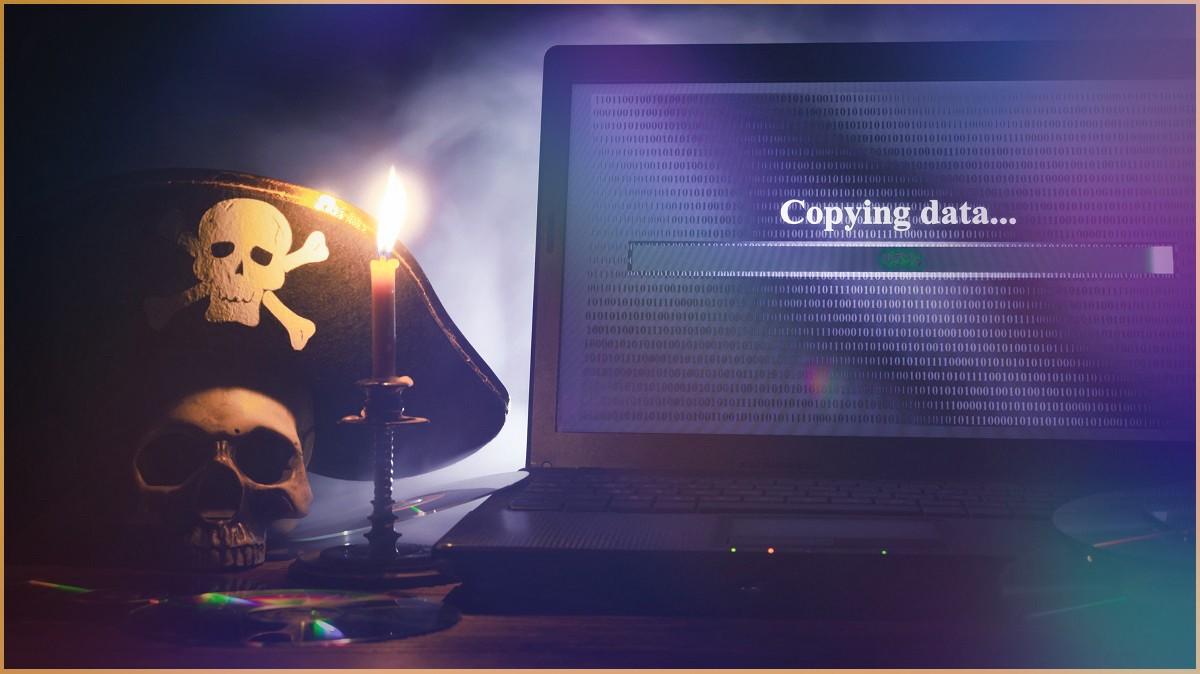
Forensic Watermarking is a technology that helps protect video and audio content from piracy. It involves embedding a unique code or "fingerprint" into the video/audio content. This code is unique to each piece of content and is unnoticeable to the viewer. When the content is distributed illegally, the code can be extracted and used to identify the source of the content. This can be useful for copyright holders in identifying illegal copies of their content and taking action against the distributors.
This is done by slightly shifting the frequencies of certain sounds in the audio track or slightly altering the color or brightness of certain pixels in the videos. In both cases, it is imperceptible to the human ear and eye but can only be detected by specialized software. You may be wondering how this specialized software can recognize these watermarks. The software uses a process called pattern recognition to detect the watermark. This is similar to how facial recognition software works, by looking for certain patterns in the data and matching them to known patterns. In the case of forensic watermarking, the software looks for the patterns created by the watermarking process. Once the software detects the watermark, it can extract the code and use it to identify the source of the content. This process is very accurate and can even identify very small amounts of illegally distributed content.
Forensic watermarks should have the following characteristics:
Imperceptibility: Markings shouldn’t be audible or visible, and all watermarked copies should be indistinguishable from the original to a human viewer.
Capacity: Watermarks should have the ability to store large amounts of data.
Security: It should be impossible to alter or modify a watermark or create a false watermark.
Efficiency: Watermarks should be generated and extracted into and from a media item using minimal time and compute resources.
Server-side watermarking: considered the most secure, is integrated into the video processing platform and is applied at the video’s encoding stage. This style of watermarking, however, takes longer and is more expensive to implement, can cause playback delay, and requires longer video clips than client-side watermarking to enable detection.
Client-side watermarking: while common, is faster to execute but considered less secure because it is applied on the consumer’s device. Because of this, watermarking logic can be inadvertently exposed to clients. Still, most sports and other live broadcasts use client-side watermarking because extracting the marks from unauthorized streams is faster.
It was surprising to learn that there have been several high-profile cases where people were caught using forensic watermarking. One of the most well-known examples is the takedown of the Megaupload website in 2012. The FBI used forensic watermarking to link illegally distributed content to Megaupload servers, which led to the arrest of the website’s founder and several other employees. The case was a huge blow to the illegal distribution of copyrighted content online, and it showed the power of forensic watermarking in catching pirates. There have been many other similar cases, but Megaupload is the most well-known example.
There are some other techniques and methods used to prevent content piracy. Like, digital rights management (DRM), encryption, and geoblocking. DRM is a technology that restricts access to content based on certain criteria, like the user’s location or device. Encryption is a method of scrambling data so that it can only be decrypted with a key. Geoblocking is a method of restricting access to content based on the user’s geographical location. All of these methods have their own strengths and weaknesses, and they’re often used in combination to protect video content.
There are, however, some notable limitations to forensic watermarking:
Filmmakers and other content creators can, in turn, protect their content much more efficiently than ever before through forensic watermarks for audio, video, image, and other digital files. But forensic watermarking is only one part of the overall security equation for filmmakers and studios. If data gets into the wrong hands, forensic watermarking can find where the leak happened. It can’t prevent it altogether.