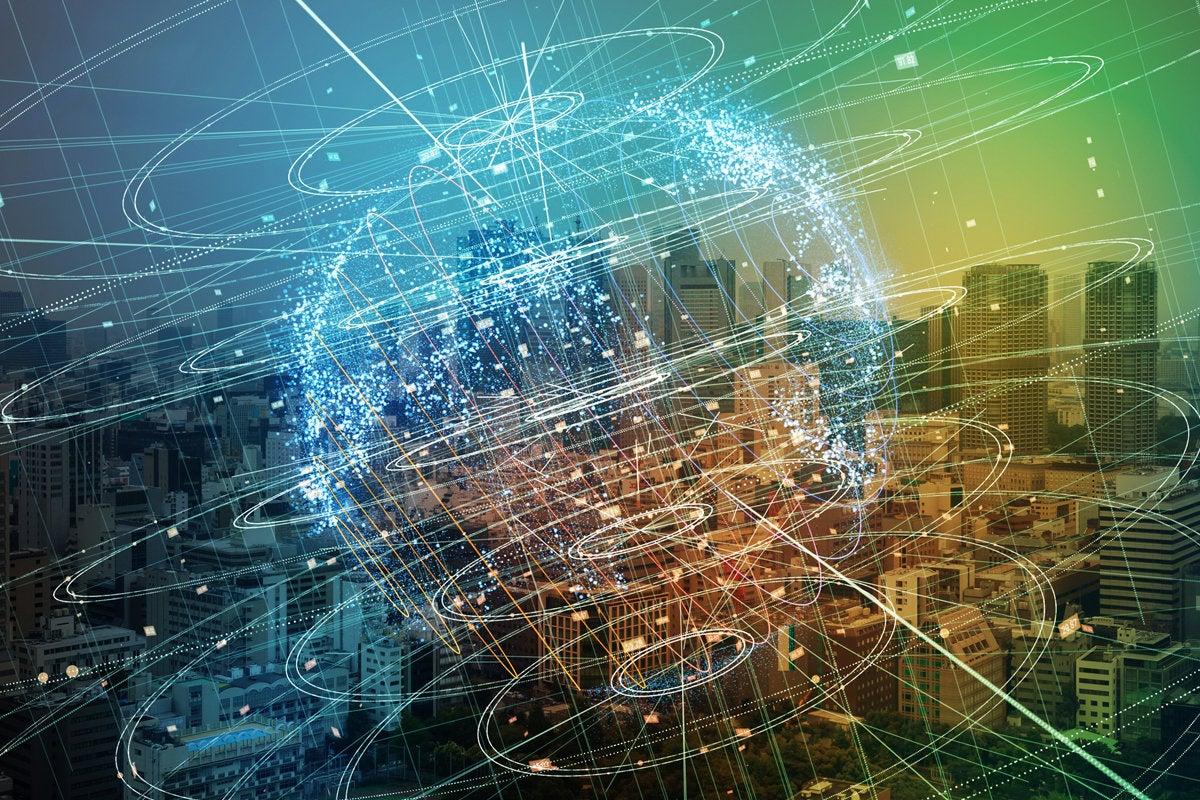
The internet is a global system of connected networks that consists of millions of computers, servers, routers, and printers on every network. Learn about the definition/explanation of the internet, who created the internet, and how information is transmitted across the internet.According to Webopedia, the Internet is a worldwide system of connected networks. Each network consists of millions of computers, servers, routers, and printers. You can think of the Internet like the telephone network or the interstate highway system. You may have even heard people refer to the Internet as the Information Super Highway. The networks that make up the Internet may be owned and maintained by different companies but messages and data move across all of them without regard to ownership because they all use the same protocol or language to communicate.Who Created the Internet?
According to Hobbes' Internet Timeline, in 1957, the Soviet Union launched the first satellite into orbit. While this might not sound serious, this happened during a time in American history called the Cold War. It was at this time the threat of nuclear war was at its greatest. The thought was, if the Soviets could launch a satellite into space, then they might be able to launch a nuclear bomb and hit the United States, destroying all of our communication lines.
The Internet began in 1969 as a research project funded by the Department of Defense with a goal of creating a means of communication beside telephone lines. The first network was called ARPANET (Advanced Research Project Agency NETwork). The focus was on communicating in the event part of the network was disabled. This early network was the precursor to the Internet. It was limited in function but launched the idea of a different method of communication.
How Does Information Move Across the Internet?
Information moves across the Internet much like UPS delivers packages. When you order something, it could be boxes in multiple packages because one box would be too large to deliver. A message or webpage is broken down into packets to be delivered to your computer. Each packet has addressing information so that it knows where it is going. Your message or webpage could be broken down into many packets and each packet will have the address and the number of the packet so that when it gets to its final destination your computer or email server will know how to put the packet together to make a meaningful message.
In the beginning, most information moved across telephone lines using a modem and dial up connection. This method of connection, slow and unreliable, is still available. Today, though, we have connections, such as ISDN - Integrated Service Digital Network, DSL - Digital Subscriber Line, T1 and T3 lines, that provide faster speeds. You can also get the Internet over your local cable TV lines and by satellite. No matter how you connect to the Internet, it has likely become a vital part of your everyday life.