Atlantis-The Lost Island
Well Atlantis is said to be totally myth where it is said that over 11,000 years ago there existed an island nation located in the middle of the Atlantic ocean populated by a noble and powerful race. The people of this land possessed great wealth thanks to the natural resources found throughout their island. The island was a center for trade and commerce. The rulers of this land held sway over the people and land of their own island and well into Europe and Africa.
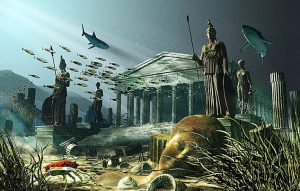 This was the island of Atlantis.
It is a legendary city which is described in the work of the
Greek philosopher Plato (c. 429 – 347 BC). The story of Atlantis with its fabulously wealthy and advanced civilization which was swept into the sea to be lost for ever has captured the imagination of readers for over two millennia. Without any archaeological evidence or substantial information from sources besides Plato, the legend poses more questions than answers. Was there a real Atlantis? Was the story based on the ancient Minoan civilization? Was the disaster that swept away the city the eruption of Thera on Santorini in the Aegean, or was the whole story a fiction of Plato’s to illustrate the glory of his own city of Athens and provide a moral example of what happened to cities who became greedy and neglected the rule of law? If it had been a real state then who founded it? Why do we know so little about it? Where is it now? These are all questions endlessly speculated by scholars and history enthusiasts without any satisfactory answers ever being reached.
The story of Atlantis first appears in Plato’s
Timaeus, one of his later works. The dialogue’s title derives from its protagonist, a fictional Pythagorean philosopher from Southern Italy who discusses the soul with Socrates. This particular dialogue is not a philosophical one, though, but rather an exercise in sophistry and involves an extremely long monologue by Timaeus on the creation of the world.
Critias’ story is introduced by another guest
Hermocrates (a historical general from Syracuse) who urges Critias to tell his story "that goes back a long way" (20d). Critias begins by emphasising his story is true and was vouched for by Solon, the Greek statesman and poet who lived c. 640 - c. 560 BCE. Critias acknowledges his story is "a very strange one, but even so, every word of it is true" (20d). He says that Solon told it to his friend Dropides, Critias’ great-grandfather, and it was passed on down the family generations. Solon, we are told, heard the story on his travels in Egypt, specifically by priestly scholars at Sais, and had meant to put it in writing but never found the opportunity. Critias would like to tell the story because it illustrates one of Athens’ greatest ever achievements but has, unfortunately, been forgotten over time due to its great antiquity, according to the Egyptian priests, 9,000 years before Plato.
In 1679 the Swedish scientist
Olaus Rudbeck published "
Atland," a four-volume work in which he attempted to prove that Sweden was the original site of Atlantis and that all human languages were descended from Swedish. Though considered authoritative in his homeland, few outside of Sweden found Rudbeck’s arguments convincing.
Atlantis resurfaces
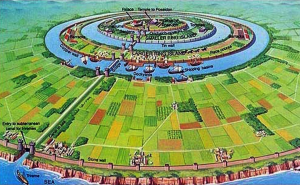
For most of the past two millennia, no one thought much about Atlantis; it was just what it appeared to be: a fictional place mentioned in a fable by the ancient Greek philosopher. The idea that Atlantis was an actual lost historical location is a very recent idea, first proposed by a writer named
Ignatius Donnelly in
1881. He believed that most of the important accomplishments of the ancient world — such as metallurgy, agriculture, religion and language — must have come from Atlantis. In essence, he argued that ancient cultures weren't sophisticated enough to develop these things on their own, so they must have spread from some unknown advanced civilization.
Later writers elaborated on Donnelly's theories, adding their own opinions and speculations. These included mystic
Madame Blavatsky (in her 1888 book, "The Secret Doctrine") and famous psychic
Edgar Cayce in the 1920s and 1930s. Cayce, who put a fundamentalist Christian spin on the Atlantis story, gave psychic readings for thousands of people — many of whom, he claimed, had past lives in Atlantis. Unfortunately, none of the information was verifiable, and Cayce wrongly predicted that the continent would be discovered in 1969.
Charles Berlitz, author of many popular books on the paranormal and unexplained phenomena, researched Atlantis and wrote a 1969 book titled
"The Mystery of Atlantis". Berlitz, whose family created the famous language-learning courses, not only became convinced that Atlantis was real but also that it was the source of the Bermuda Triangle mystery, a subject he explored in his 1974 best-seller
"The Bermuda Triangle." Berlitz's wild ideas about the Bermuda Triangle — and, by extension, Atlantis — were definitively debunked the following year by researcher
Larry Kusche, author of
"The Bermuda Triangle Mystery — Solved." Thousands of books, magazines and websites are devoted to Atlantis, and it remains a popular topic in New Age circles.
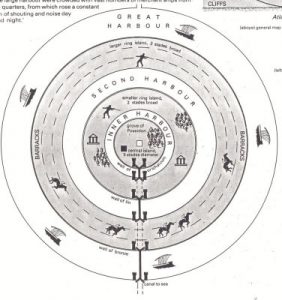 Theories About Atlantis
-
Atlantis was swallowed up by the Bermuda Triangle.
-
Atlantis was Antarctica.
-
Atlantis is the story of the Minoan civilization, which flourished in the Greek islands circa 2500-1600 B.C.
-
Atlantis didn’t exist at all–Plato invented it.
-
Atlantis was a spaceship.
While I am no expert on the theories about Atlantis, I am an enthusiastic lover of mysterious things and places, and Atlantis has intrigued me and inspired me since the first time I heard of it.