wisemonkeys logo
FeedNotificationProfileManage Forms
FeedNotificationSearchSign in
wisemonkeys logo

Blogs

Deadlock

profile
Prachiti Borle
Aug 13, 2024
0 Likes
0 Discussions
45 Reads

What Is a Deadlock?
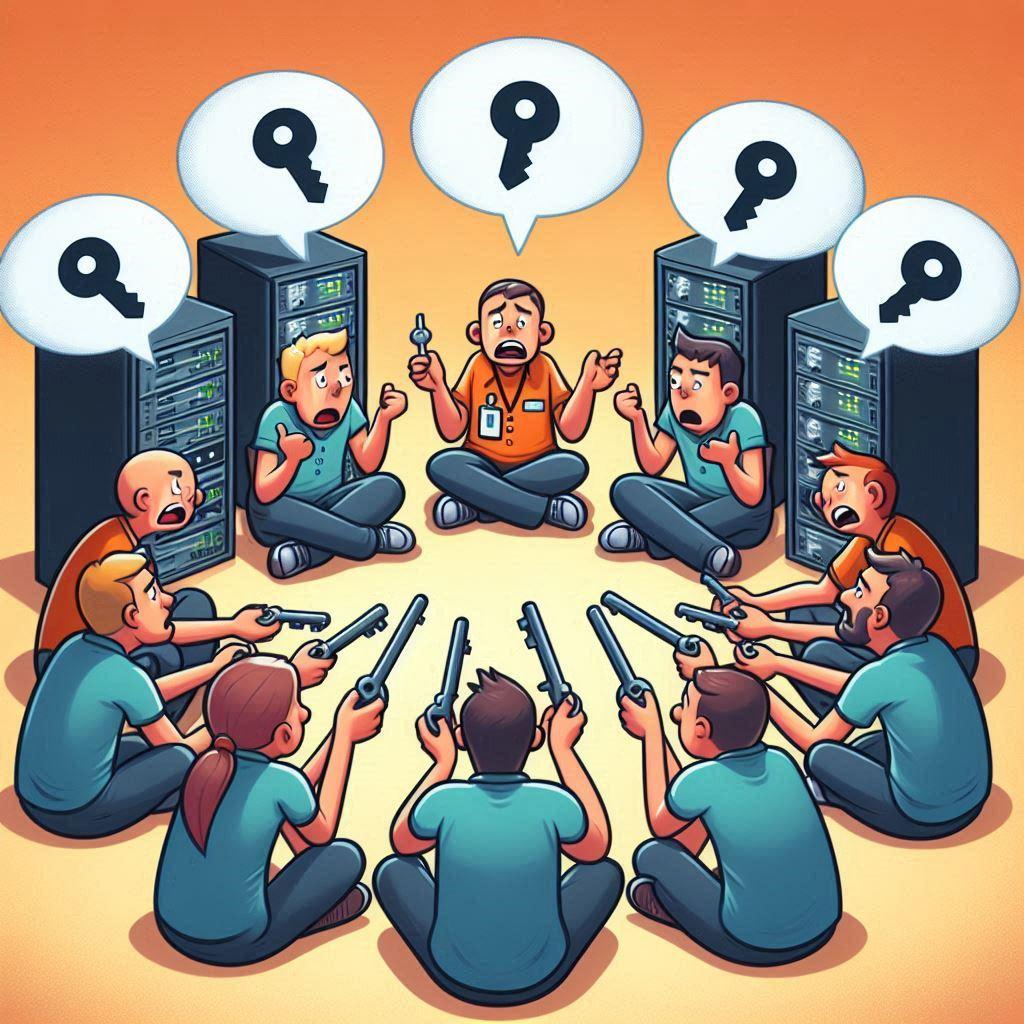
In computing, a deadlock is a situation wherein two or more processes are in a difficult or embarrassing predicament. Think of this: Each process is holding on to one resource (like a stubborn squirrel clutching its acorn), and they are all waiting for another resource that happens to be held by someone else. It is like a cosmic game of "I will wait if you will wait." ????

The basic concepts underlying deadlocks are

1 Mutual Exclusion: Resources are possessive little creatures. Take a printer, for example. It insists on serving just one set of print jobs at any time. That is mutual exclusion—no more than one process is allowed to use a resource at any given time.
2 Hold and Wait: Processes can be pretty demanding. They hold on to one resource (like a toddler clings to their favorite toy) while simultaneously holding on and waiting on another resource. It is like saying, "I'm not letting go of this crayon until I get that cookie!"
3 No Preemption: Resources are pretty stubborn. Once a process gets its mitts on something, it won't let it go unless it decides to release it voluntarily. No snatching is allowed!
4 Circular Wait: Imagine a circle of processes each of which is waiting for the process on the left to pass a talking stick. If the stick is never passed, they are in a circular wait. In more detail, with deadlock, it's musical chairs when the music stops, but all are too polite to take a chair.

There are three ways to handle deadlock

  • Deadlock Prevention or Avoidance
  • Deadlock Recovery
  • Deadlock Ignorance

Necessary Conditions of Deadlock

* Mutual Exclusion: Resources are loved.
* Hold and Wait: Each process holds resources.
* No Preemption: Resources can't be forcibly taken away.
* Circular Wait: The waiting game is circular.


Comments ()


Sign in

Read Next

Importance Of Education.

Blog banner

Earth with no trees

Blog banner

The Laws of Karma

Blog banner

Data Science in Predictive Analytics: Transforming Business Decision-Making

Blog banner

Instagram

Blog banner

Fault Tolerance

Blog banner

Rules and Regulations of Networking: "Standards and Protocols" - Part 1

Blog banner

Computer Security

Blog banner

NETWORK SECURITY RISKS

Blog banner

Virtual Memory

Blog banner

Clustering Techniques

Blog banner

OS Assignment-3

Blog banner

Unlocking Success: Mastering Google Ads Strategies

Blog banner

Ransomware

Blog banner

City of Mumbai (Bombay):

Blog banner

How GIS in Agriculture Eliminates Guesswork

Blog banner

Service Operation

Blog banner

38_Network Sniffing Techniques_SBC

Blog banner

10 Reasons why Monica and Chandler are the best couple ever.!!!

Blog banner

Full Disk Encryption

Blog banner

"Can Lisp do Machine Learning?"

Blog banner

Memory

Blog banner

Mariana Trench: The deepest depths

Blog banner

WHAT IS SNAPCHAT AND HOW DOES IT WORK?

Blog banner

Race Condition in Operating Theatre

Blog banner

Human Error: The weakest link in Cybersecurity

Blog banner

RACI model in IT services

Blog banner

Biometric Authentication Vulnerabilities

Blog banner

Why Time Management Is the Secret to College Success (and How to Master It)

Blog banner

IP ADDRESS

Blog banner

The Evolution of the Microprocessor ~ Aditya Pai

Blog banner

The art of being alone

Blog banner

Technical Challenges and Directions for Digital Forensics

Blog banner

Life

Blog banner

Top 10 Logos and their meanings

Blog banner

Virtual Memory

Blog banner

Article on IT development trends

Blog banner

Autonomy Vehicles: Future Ki Gadiya

Blog banner

Cyber Laws In India and Around the World

Blog banner

Threads and concurrency

Blog banner

Article on Team Work

Blog banner

MQTT (MQ Telemetry Transport) in Data Science

Blog banner