wisemonkeys logo
FeedNotificationProfileManage Forms
FeedNotificationSearchSign in
wisemonkeys logo

Blogs

Fault tolerance

profile
23 B Titiksha Shah
Jul 04, 2024
0 Likes
0 Discussions
104 Reads

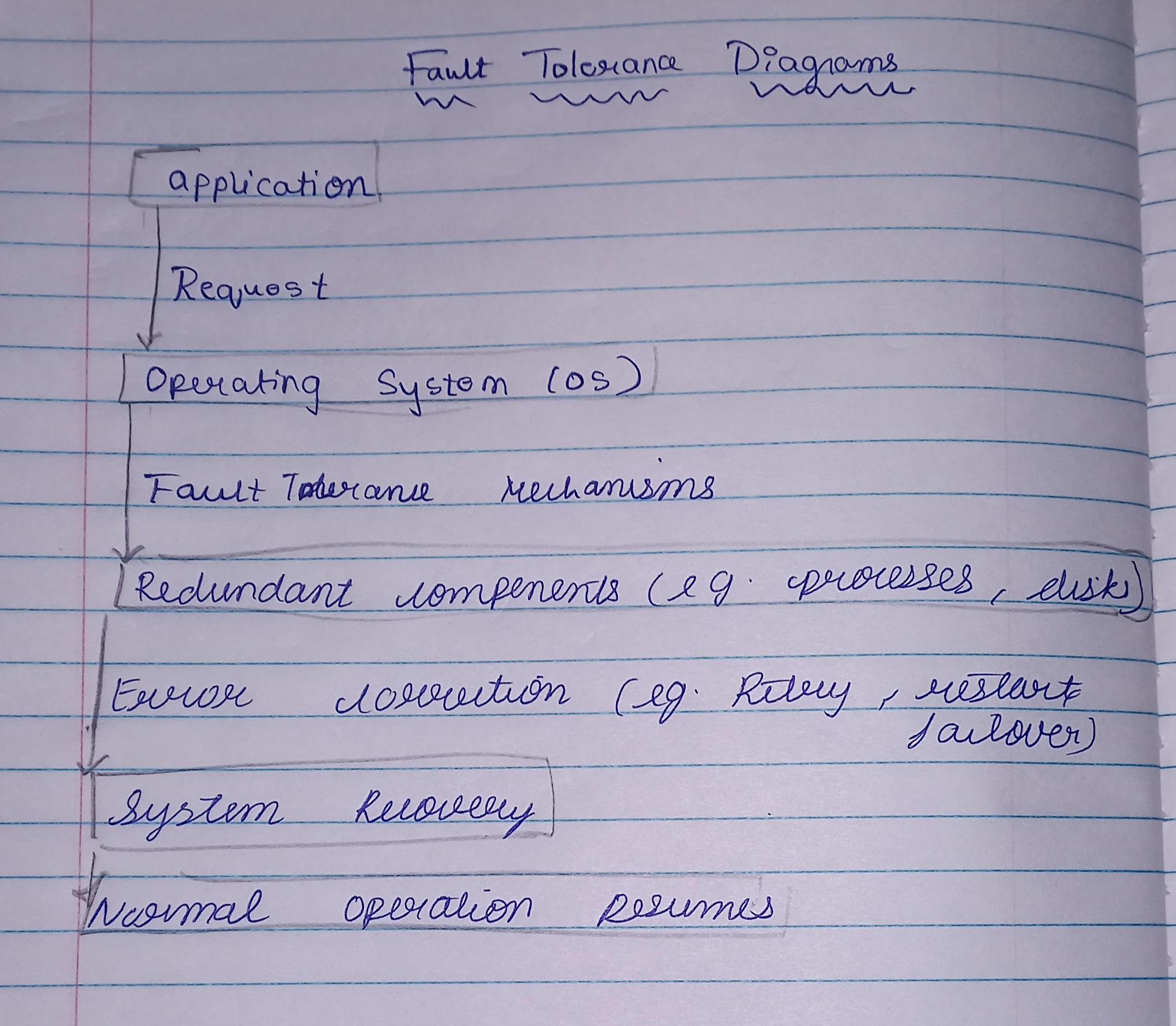
Here's a detailed explanation of fault tolerance, broken down into its key components:


*Fault Tolerance:*


- *Definition:* The ability of a system to continue functioning even when one or more components fail or encounter errors.

  • *Goal:* Ensure minimal impact on system performance and availability despite hardware or software failures.
  • Real-world examples*:
  •     - NASA's Space Shuttle OS: designed to tolerate multiple faults without failing
  •     - Air traffic control systems: use redundant hardware and software to ensure fault tolerance
  •     - Cloud computing: uses distributed systems and redundancy to achieve fault tolerance


*Key Components:*


1. *Redundancy:*

    - Duplicate critical components to ensure continued operation.

    - Examples: redundant servers, disks, power supplies, network connections.

2. *Error Detection and Diagnosis:*

    - Identify and diagnose errors or faults using techniques like:

        - Error-correcting codes (ECC)

        - Checksums

        - Heartbeat mechanisms

        - Log analysis

3. *Error Correction:*

    - Recover from errors or faults using techniques like:

        - Retry

        - Restart

        - Failover (switch to backup component)

        - Rollback (revert to previous state)

4. *Fault Isolation:*

    - Isolate faulty components to prevent failure propagation.

    - Examples: process isolation, memory protection, device isolation.

5. *Fault Recovery:*

    - Restore system functionality after fault correction.

    - Examples: process restart, system reboot, failback (return to primary component).


*Techniques:*


1. *Hardware Redundancy:*

    - Duplicate hardware components (e.g., disks, power supplies).

2. *Software Redundancy:*

    - Duplicate software components (e.g., processes, threads).

3. *Time Redundancy:*

    - Use temporal redundancy to repeat tasks or operations.

4. *Information Redundancy:*

    - Use data redundancy to detect and correct errors (e.g., ECC, checksums).


*Benefits:*


1. *High Availability:* Minimize system downtime and ensure continuous operation.

2. *Reliability:* Reduce the likelihood of system failures and errors.

3. *Maintainability:* Simplify maintenance and repair processes.

4. *Performance:* Ensure consistent system performance despite faults.


*Challenges:*


1. *Complexity:* Fault-tolerant systems can be complex and difficult to design.

2. *Cost:* Implementing fault tolerance can increase system costs.

3. *Performance Overhead:* Fault-tolerant mechanisms can introduce performance overhead.


By understanding these components, techniques, benefits, and challenges, you can design and implement effective fault-tolerant systems 


Comments ()


Sign in

Read Next

File Management In OS

Blog banner

Cyber Bullying - Neeta Vonkamuti

Blog banner

Operating Systems

Blog banner

Memory Management

Blog banner

Types Of scheduling

Blog banner

History of Money

Blog banner

Fault Tolerance

Blog banner

Cyber Security Standards

Blog banner

Scheduling in Operating Systems

Blog banner

Security issues

Blog banner

Digital Marketing

Blog banner

Steganography and Steganalysis

Blog banner

Study on cyber and network forensic in computer security management

Blog banner

Virtual Machine

Blog banner

A Survey of Anti-Forensic Techniques: Methods, Challenges, and Countermeasures

Blog banner

Article on different management system

Blog banner

SmartData Collective: Data Science aur Analytics ki Duniya

Blog banner

Skills An Ethical Hacker Must Have

Blog banner

Hacking of web server and application

Blog banner

Chicken Dum Biryani

Blog banner

Top 5 Post-Wedding Skin Care Tips

Blog banner

Juveniles, Internet and Computer Crime

Blog banner

Traveling

Blog banner

MySQL

Blog banner

Bitcoin sent using radio waves! No internet!

Blog banner

Virtual machine.

Blog banner

A-B-C of Networking: Part-3 (Topology [Ring, Tree, Mesh])

Blog banner

Sage business cloud accounting

Blog banner

Message Passing in OS

Blog banner

Top 10 Logos and their meanings

Blog banner

10 Reasons to date your best friend

Blog banner

Linker

Blog banner

WAKE UP ITS FOOD o'CLOCK...!!!!!

Blog banner

PERSONAL STORIES

Blog banner

CONCURRENCY: MUTUAL EXCLUSION AND SYNCHRONIZATION-het karia

Blog banner

Fault Tolerance in an Operating System

Blog banner

Teamwork

Blog banner

Characteristics of Etherum

Blog banner

Multiple processor scheduling

Blog banner

"Games and the future"

Blog banner

Blockchain technology: security risk and prevention

Blog banner

objectives and functions of operating system

Blog banner