wisemonkeys logo
FeedNotificationProfileManage Forms
FeedNotificationSearchSign in
wisemonkeys logo

Blogs

Scheduling in Operating Systems

profile
Juhi Soni
Sep 09, 2024
0 Likes
0 Discussions
109 Reads

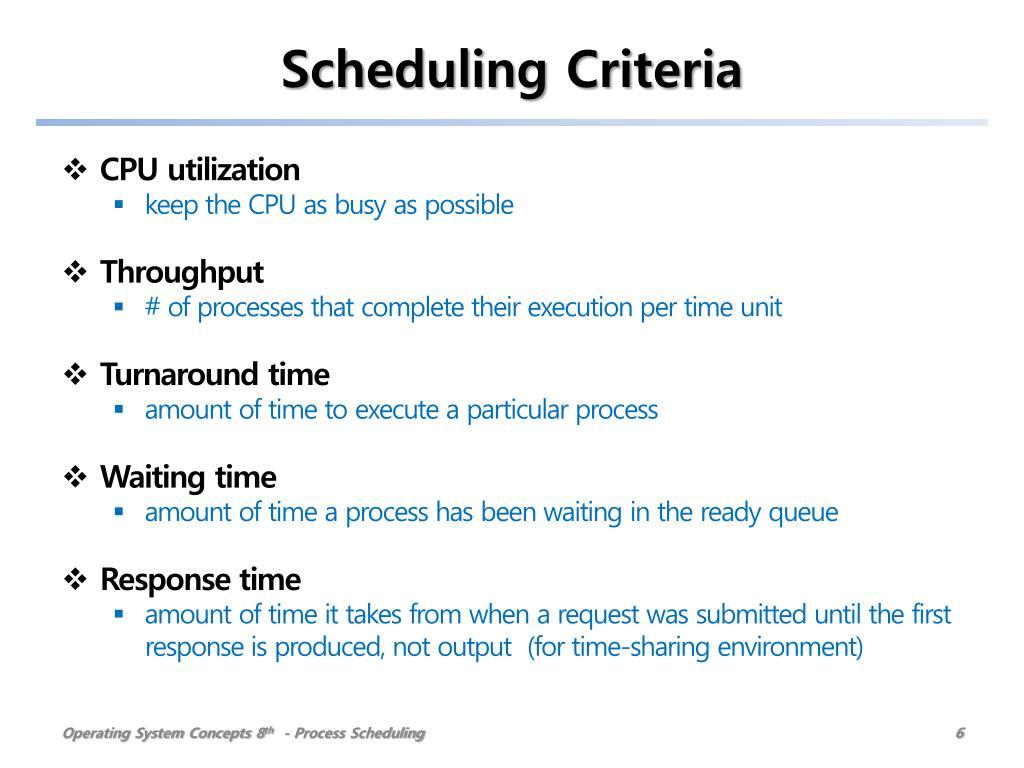
In an operating system, scheduling refers to the method by which tasks are managed and allocated CPU time. The CPU is like the brain of a computer, and scheduling helps ensure it is used efficiently by deciding which task runs at any given time. In this blog, we’ll explore three types of scheduling: Uniprocessor, Multiprocessor, and Real-time.


1. Uniprocessor Scheduling:

Uniprocessor scheduling refers to systems where only one processor (CPU) is available. This type of scheduling decides which task should be executed first from a pool of tasks. The two most common types of uniprocessor scheduling are preemptive and non-preemptive.


  • Preemptive scheduling allows the CPU to switch between tasks even if a task is not completed. For example, if you’re watching a video and suddenly open a document, the CPU will stop processing the video and switch to the document.


  • Non-preemptive scheduling lets the task finish its execution before switching to another. This is like waiting in line at the cafeteria—everyone gets served one by one.


A widely used preemptive scheduling algorithm is the Round Robin method, where each task gets a fixed amount of CPU time (known as a time slice) before switching to the next task.


2. Multiprocessor Scheduling:

In multiprocessor systems, multiple CPUs are available to process tasks simultaneously. This is like having several chefs in a kitchen preparing different meals at the same time. Scheduling in such systems is more complex as the load must be evenly distributed across all processors to avoid overloading one processor while others remain idle.

There are two main approaches:


  • Symmetric multiprocessing (SMP): Each processor works independently and shares the same scheduling queue.


  • Asymmetric multiprocessing (AMP): One processor handles the scheduling, while the others follow its instructions.


Multiprocessor scheduling is used in powerful servers and modern computers to handle heavy workloads like running multiple applications simultaneously.


3. Real-time Scheduling:

Real-time scheduling is critical in systems where tasks must be completed within a strict deadline. For example, in a self-driving car, the system must process sensor data and make decisions in real-time to ensure safety.

There are two types of real-time scheduling:


  • Hard real-time: Missing a deadline can lead to system failure, like in medical devices.


  • Soft real-time: Missing deadlines is not catastrophic but still undesirable, like in video streaming where slight delays may cause buffering.


In conclusion, scheduling is essential for efficient system performance, and different types of systems require different scheduling approaches. Whether it’s managing tasks in a single CPU, distributing loads across multiple CPUs, or meeting real-time deadlines, scheduling ensures that your computer runs smoothly.



Comments ()


Sign in

Read Next

A Survey of Anti-Forensic Techniques: Methods, Challenges, and Countermeasures

Blog banner

Anomaly Detection in Behavioral Data Using Machine Learning

Blog banner

Guidelines for a Low sodium Diet.

Blog banner

Web Site

Blog banner

CONCURRENCY

Blog banner

Article on different management system

Blog banner

Cyber Laws In India and Around the World

Blog banner

Process in OS

Blog banner

Buffer overflow

Blog banner

Cache memory

Blog banner

APACHE KAFKA

Blog banner

GUIDE TO GIS

Blog banner

Celebrate Diwali the Delicious Way with Meal Maharaj Catering

Blog banner

Reconnaissance

Blog banner

The Evolution of Operating Systems

Blog banner

Telegram and it's features

Blog banner

Should you be using a mouthwash? Know from the experts

Blog banner

10 Amazing facts about Tokyo Ghoul

Blog banner

INTERNET SECURITY

Blog banner

INTRODUCTION TO C#

Blog banner

Virtual memory

Blog banner

8 Reasons Why You Must Try Digital Marketing

Blog banner

Memory management

Blog banner

Hosting basics

Blog banner

6 Digital Marketing Trends You Must Watch Out For In 2022

Blog banner

Women Empowerment

Blog banner

The Right way of cooking

Blog banner

Modern operating system

Blog banner

1.1 basic elements

Blog banner

OS ASSIGNMENT

Blog banner

RAID - LEVELS OF RAID

Blog banner

Making Money through Instagram

Blog banner

38_Network Sniffing Techniques_SBC

Blog banner

File management

Blog banner

OS Evolution Achievements

Blog banner

10 Alien Encounters and Abduction Stories

Blog banner

Spyware

Blog banner

How to Run your First android App

Blog banner

Atlantis - The Lost Island.........

Blog banner

NETWORK SECURITY RISKS

Blog banner

Electronic Funds Transfer

Blog banner

HR Automation : Need of the hour

Blog banner