wisemonkeys logo
FeedNotificationProfileManage Forms
FeedNotificationSearchSign in
wisemonkeys logo

Blogs

File management -disha parekh

profile
Disha Parekh
Sep 08, 2024
0 Likes
0 Discussions
99 Reads

File management in an operating system refers to the ways in which the OS handles and organizes files on storage devices such as hard drives, solid-state drives, and flash drives. Here are some key aspects of file management:


1. File Systems: A file system is a way of organizing files on a storage device. Common file systems include FAT, NTFS, HFS, and ext4.


2. File Naming: Rules for naming files, such as allowed characters, length limits, and naming conventions.


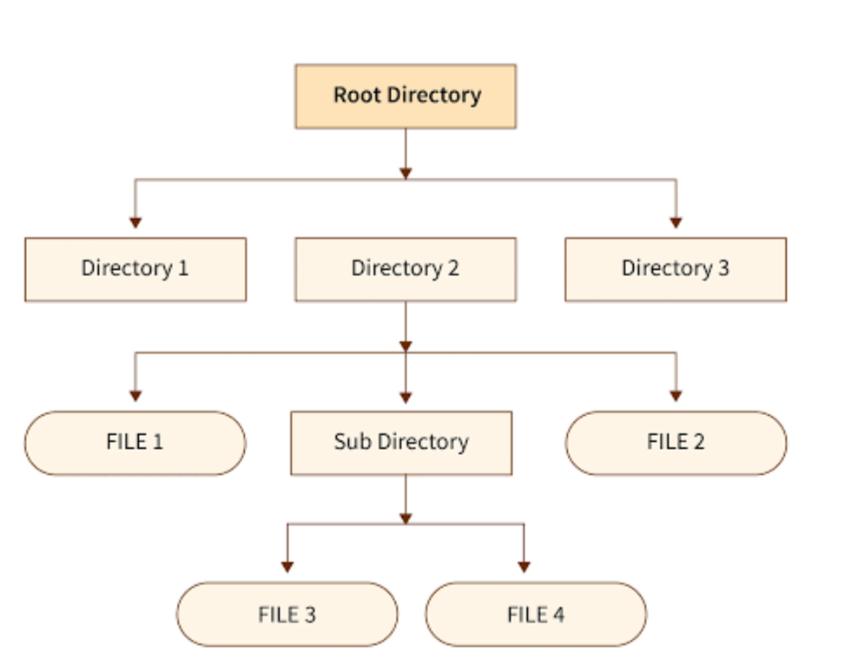
3. File Structure: How files are organized in a hierarchical structure of directories and subdirectories.


4. File Permissions: Control over who can access, modify, or delete files.


5. File Storage: How files are stored on disk, including allocation methods and disk formatting.


6. File Retrieval: How files are retrieved from disk, including file searching and indexing.


7. File Editing: How files are modified, including file locking and version control.


8. File Backup: Creating copies of files to prevent data loss.


9. File Compression: Reducing file size to save storage space.


10. File Encryption: Protecting files from unauthorized access.


File management operations include :

• Create: A new file is defined and positioned within the structure of files.

• Delete: A file is removed from the file structure and destroyed.

• Open: An existing file is declared to be “opened” by a process, allowing the

process to perform functions on the file.

• Close: The file is closed with respect to a process, so that the process no longer

may perform functions on the file, until the process opens the file again.

• Read: A process reads all or a portion of the data in a file.

• Write: A process updates a file, either by adding new data that expands the size of the file or by changing the values of existing data items in the file.



Comments ()


Sign in

Read Next

Multiprocessor and Multicore Organization

Blog banner

What is Email? Uses of Emails

Blog banner

Image Steganography: Hiding Secrets in Plain Sight

Blog banner

LEMON PICKLE (NIMBU KA ACHAR)

Blog banner

Different Types of Data

Blog banner

Raising Emotionally Intelligent Students: The Classroom Beyond Academics

Blog banner

Financial Fraud Detection

Blog banner

The evolution of OS

Blog banner

Linux Memory Management

Blog banner

Malware

Blog banner

The Role of Cyber Forensics in Criminology

Blog banner

OS Assignment 1

Blog banner

BIRYANI ! The history you never knew about

Blog banner

Blog on Smartsheet.

Blog banner

The Rich Heritage Of Patola Sarees: Gujarat’s Timeless Weaving Art

Blog banner

Cyber Forensics

Blog banner

MODERN OPERATING SYSTEM

Blog banner

Theads

Blog banner

Mumbai Metro 3

Blog banner

Hosting basics

Blog banner

Every body is beautiful

Blog banner

Modern operating system

Blog banner

Study on cyber and network forensic in computer security management

Blog banner

Virtual memory

Blog banner

Deadlock and Starvation

Blog banner

Multicore and multithreading 171

Blog banner

JIRA SOFTWARE

Blog banner

Article on different management system

Blog banner

Types of Hackers

Blog banner

1.1 basic elements

Blog banner

Top 4 Places To Stay In Copenhagen

Blog banner

RSA (Rivest-Shamir-Adelman) Algorithm

Blog banner

Electronic data interchange

Blog banner

THE INPACT OF SOCIAL MEDIA!

Blog banner

Threads in OS

Blog banner

Modern operating system

Blog banner

computer security

Blog banner

WAKE UP ITS FOOD o'CLOCK...!!!!!

Blog banner

Fitness

Blog banner

Cache memory

Blog banner

How to make Pancakes

Blog banner

note taker app

Blog banner