wisemonkeys logo
FeedNotificationProfileManage Forms
FeedNotificationSearchSign in
wisemonkeys logo

Blogs

(Input/Output) in os

profile
Dhruv Koladiya
Sep 08, 2024
0 Likes
0 Discussions
73 Reads

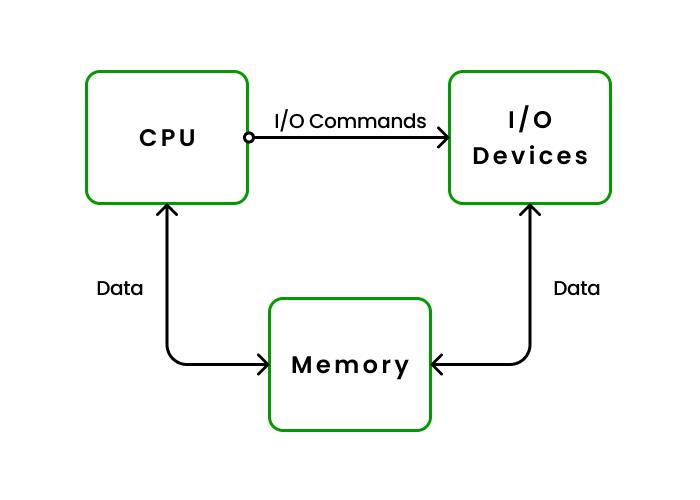
In an Operating System (OS), I/O (Input/Output) refers to the communication between the computer and the external world, such as with devices like keyboards, mice, printers, displays, and storage drives. The operating system manages this interaction to ensure that data can be transferred between the CPU and these I/O devices efficiently.

Key Points about I/O in an OS:

  1. I/O Devices: These include:
  • Input devices: Keyboard, mouse, scanner.
  • Output devices: Monitor, printer, speakers.
  • Storage devices: Hard disks, USB drives, SSDs
  1. I/O Operations:
  • Input: When data is sent to the computer, like pressing a key or clicking the mouse.
  • Output: When data is sent from the computer, like displaying something on the screen or printing a document.
  1. I/O Controller: Each device has its own I/O controller that interprets the signals between the device and the computer.
  2. Device Drivers: These are special programs that allow the OS to communicate with hardware devices. They translate general OS instructions into specific commands for the hardware.
  3. Interrupts: When an I/O operation is completed (e.g., a file is written), the device can send an interrupt to inform the CPU, so it knows the operation is done.
  4. Buffering: Data is often stored temporarily in a buffer while it’s being transferred between the CPU and an I/O device to handle speed differences between them.


Comments ()


Sign in

Read Next

Improving defences Proxy Device(defense in depth)

Blog banner

Question

Blog banner

The Memory Hierarchy

Blog banner

Ethical Hacking

Blog banner

How Cyber Forensics help prevent Crimes

Blog banner

The Right way of cooking

Blog banner

Cache memory

Blog banner

Cache memory

Blog banner

Kernel Modes: User Mode vs. Kernel Mode - 80

Blog banner

Knowledge Management in Continual Service improvement (CSI)

Blog banner

Understanding - Proof of Work!

Blog banner

Elements and Principles of Photography

Blog banner

Full Disk Encryption on Digital Forensics

Blog banner

ACHIEVEMENTS IN OPERATING SYSTEMS

Blog banner

Dangers of Using Public WiFis

Blog banner

Impacts of Data Breach On Companies Challenges and Prevention

Blog banner

Data Science in Healthcare: Predicting Diseases

Blog banner

Meshoo

Blog banner

Optimization of operating system design

Blog banner

Steganography

Blog banner

Multicore and multithreading 171

Blog banner

Virtual memory

Blog banner

Developments in Modern Operating Systems

Blog banner

Memory management and virtual memory

Blog banner

Exploring Virtual Machines and Computer Forensic Validation Tools

Blog banner

Types of Threads

Blog banner

Electronic Funds Transfer

Blog banner

Memory Management in Operating System

Blog banner

INTERNET SECURITY

Blog banner

Vulnerabilities in OnePlus Devices

Blog banner

What is online marketing and why do you need to know about it ?

Blog banner

EVOLUTION OF THE MIRCOPROCESSOR

Blog banner

What is OS Fingerprinting?

Blog banner

Study on cyber and network forensic in computer security management

Blog banner

From Loom to Luxury: How Patola Elevates Modern Wardrobes

Blog banner

MQTT (MQ Telemetry Transport) in Data Science

Blog banner

How Cyber Forensics use in AI

Blog banner

Friendship

Blog banner

Decision Tree: A Diagram Model

Blog banner

Modern Operating Systems.

Blog banner

First-Order Logic (FOL): The Foundation of Modern Logic

Blog banner

TAILS OS

Blog banner