wisemonkeys logo
FeedNotificationProfileManage Forms
FeedNotificationSearchSign in
wisemonkeys logo

Blogs

Types of Threads

profile
Ashlyn Rodrigues
Aug 02, 2023
1 Like
0 Discussions
77 Reads

Threads are like workers in an operating system. They help get things done faster by doing multiple tasks at the same time.

There are two main types of threads:

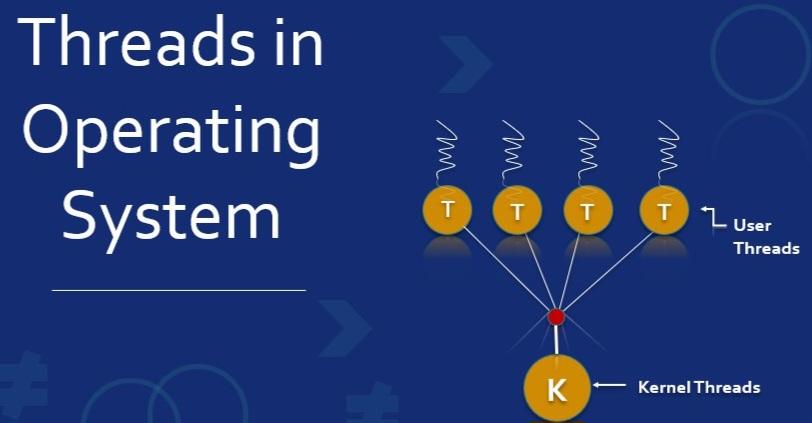
1. User-level threads: They are managed by the application itself and are quick to switch between tasks. However, they have some limitations in using system resources.

2. Kernel-level threads: These threads are managed by the operating system, and they can handle more tasks at once. They are better at using multiple CPU cores efficiently.

Think of it like this: User-level threads are like independent contractors hired by an application, and kernel-level threads are like employees directly managed by the operating system.

In terms of how they work together, there are different models:

- Many-to-One Model: Multiple user-level threads are managed by a single kernel-level thread. This model is simple but lacks real parallelism.

- One-to-One Model: Each user-level thread is directly managed by a separate kernel-level thread. It offers true parallelism but can be resource-intensive.

- Many-to-Many Model: Multiple user-level threads are mapped to a smaller number of kernel-level threads, striking a balance between concurrency and resource usage.

The choice of thread type and model depends on the application's needs and the system's capabilities. So, threads help applications get things done faster and efficiently by doing tasks simultaneously.



Comments ()


Sign in

Read Next

ARTICAL ON MANAGEMENT SYSTEM

Blog banner

Sleep Matters: The Science Behind Toddler Naps

Blog banner

38_Exploring The Honeynet Project

Blog banner

COMPUTER FORENSICS AND GRAPHICS

Blog banner

PERT Overview

Blog banner

File and File System Structure

Blog banner

VIRTUAL MACHINE

Blog banner

RAID

Blog banner

Evolution of the Microprocesor

Blog banner

Developments in Modern Operating Systems

Blog banner

Binary Search Tree (BST) in Data Structure

Blog banner

Incident management in ITSM

Blog banner

Steps to create an Ubuntu EC2 Instance with GUI in AWS

Blog banner

Student Grade Calculator in LISP

Blog banner

Importance of self defence for girls

Blog banner

Computer Forensics and its Impact in Business Environment

Blog banner

Danger assessment in GIS

Blog banner

How to kiss

Blog banner

PYTHON

Blog banner

Apache Kafka

Blog banner

A Survey of Anti-Forensic Techniques: Methods, Challenges, and Countermeasures

Blog banner

Functions of Operating System

Blog banner

Working with Sniffers for monitoring network communication

Blog banner

IoT Architecture Based Security

Blog banner

Difference Between Classification And Clustering

Blog banner

GIS in Disaster Management

Blog banner

I/O Buffering

Blog banner

What is Network Security?

Blog banner

operating system

Blog banner

Texting is actually better than talking in person

Blog banner

How College Events Build Real-world Skills You Can’t Learn From Textbooks

Blog banner

Internet: The Vast Ocean Of Knowledge.

Blog banner

ROLE OF THE COMPUTER FORENSICS TOOLS AND TECHNIQUES

Blog banner

Linker

Blog banner

Top 5 Benefits of Artificial Intelligence

Blog banner

Linux Threads:

Blog banner

Why Data Security Is Important

Blog banner

Instagram

Blog banner

Multiprocessor and scheduling

Blog banner

Secure Hypertext transfer protocol

Blog banner

The Power of Teamwork: Learning Collaboration Through Everyday Activities

Blog banner

TEAMWORK

Blog banner