wisemonkeys logo
FeedNotificationProfileManage Forms
FeedNotificationSearchSign in
wisemonkeys logo

Blogs

operating system

profile
Palak Santoki
Jul 05, 2024
0 Likes
0 Discussions
39 Reads

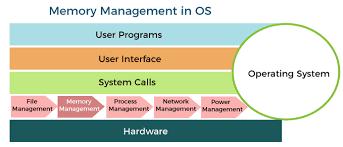
Memory is the important part of the computer that is used to store the data. Its management is critical to the computer system because the amount of main memory available in a computer system is very limited. to increase performance, several processes are executed simultaneously. For this, we must keep several processes in the main memory, so it is even more important to manage them effectively.Memory manager is used to keep track of the status of memory locations, whether it is free or allocated.The memory manager is responsible for protecting the memory allocated to each process from being corrupted by another process. Memory managers should enable sharing of memory space between processes.memory manager permits computers with a smaall amount of main memory to execute programs larger than the size or amount of available memory.it does thiss by moving information back and forth between primary memory and secondary memory by using the concpt of swapping.memory managers should enable sharing of memoey spacebetween processss.thus two programs can reside at same memory location although at different times.
there are two types of memory management techniques:
Contiguous memory management and Non-Contiguous memory management.
In a Contiguous memory management scheme, each program occupies a single contiguous block of storage locations, i.e., a set of memory locations with addresses.
In a Non-Contiguous memory management scheme, the program is divided into different blocks and loaded at different portions of the memory that need not necessarily be adjacent to one another. This scheme can be classified depending upon the size of blocks and whether the blocks reside in the main memory or not.

memory mannagment is requried for following reasons:

1.allocate and reallocate memory before and after program execution.

2.To keep track of used memory space by processes.

3.To properly utilie main memory.

4.To maintain data integrity while executing process.


Comments ()


Sign in

Read Next

Child labour

Blog banner

INTRODUCTION

Blog banner

How To Invest In Indian Stock Market @ BSE & NSE ~ Tutorial 3

Blog banner

Data Acquisition in Cyber Forensics

Blog banner

5 Stages of Digital Marketing

Blog banner

Short note on expert system

Blog banner

Security in Cloud Computing

Blog banner

Honeypot in cyber security

Blog banner

Revolutionary AI Tool: ChatGPT

Blog banner

Supervised and Unsupervised Learning

Blog banner

INTERRUPTS

Blog banner

How India made the GIS its Own, and its Use in Infrastructural Developments

Blog banner

VIRUS

Blog banner

A-B-C of Networking: Part-3 (Topology [Bus & Star])

Blog banner

Digital Balance: Keeping Children Mindful in the Screen Age

Blog banner

What is a geographic information system (GIS)?

Blog banner

Introduction to Data Science: Life Cycle & Applications

Blog banner

Data Lake

Blog banner

Way to make your meal healthier.

Blog banner

Deadlocks

Blog banner

How GIS in Agriculture Eliminates Guesswork

Blog banner

Impacts of Data Breach On Companies Challenges and Prevention

Blog banner

Biometric Authentication and Privacy: Balancing Ethical Concerns

Blog banner

Cyber Security in Data Breaching

Blog banner

File management In Operating System

Blog banner

Types of Threads

Blog banner

Concurrency and memory

Blog banner

An Overivew Of Cache Memory

Blog banner

Memory Management

Blog banner

OS Assignment-3

Blog banner

Modern OS

Blog banner

Modern Operating system

Blog banner

KASHMIR TRIPS

Blog banner

Constrained Management in IT

Blog banner

Classification Algorithms (Decision trees, SVM, Logistic regreession)

Blog banner

Deadlock and starvation

Blog banner

Scheduling in Operating Systems

Blog banner

Webmail

Blog banner

Explaining Buffer Overflow with Example

Blog banner

GIS info about Bermuda Triangle

Blog banner

What is thread and multithreading ?

Blog banner

Memory input output management

Blog banner