wisemonkeys logo
FeedNotificationProfileManage Forms
FeedNotificationSearchSign in
wisemonkeys logo

Blogs

How Does SSO Works

profile
Mukesh Swamy
Oct 13, 2023
2 Likes
0 Discussions
192 Reads

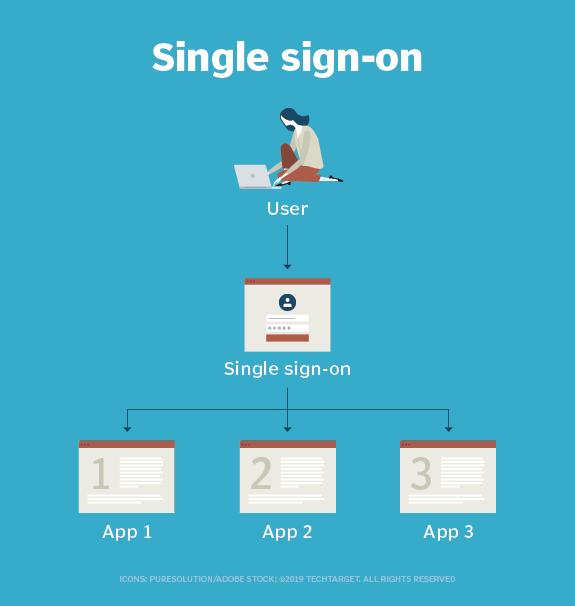
Single sign-on (SSO) is a session and user authentication service that permits a user to use one set of login credentials -- for example, a username and password -- to access multiple applications. SSO can be used by enterprises, small and midsize organizations, and individuals to ease the management of multiple credentials.

How does single sign-on work?

Single sign-on is a federated identity management arrangement. The use of such a system is sometimes called identity federation. Open Authorization (OAuth) is the framework that enables an end user's account information to be used by third-party services, such as Facebook, without exposing the user's password.

OAuth acts as an intermediary on behalf of the end user by providing the service with an access token that authorizes specific account information to be shared. When a user attempts to access an application from the service provider, the service provider sends a request to the identity provider for authentication. The service provider then verifies the authentication and logs the user in.

In a basic web SSO service, an agent module on the application server retrieves the specific authentication credentials for an individual user from a dedicated SSO policy server, while authenticating the user against a user repository, such as a Lightweight Directory Access Protocol directory. The service authenticates the end user for all the applications the user has been given rights to and eliminates future password prompts for individual applications during the same session.

Types of SSO configurations

Some SSO services use protocols, such as Kerberos or Security Assertion Markup Language (SAML):

  • In a Kerberos-based setup, once user credentials are provided, a ticket-granting ticket (TGT) is issued. The TGT fetches service tickets for other applications the user wants to access, without asking the user to reenter credentials.
  • SAML is an Extensible Markup Language standard that facilitates the exchange of user authentication and authorizationdata across secure domains. SAML-based SSO services involve communications among the user, an identity provider that maintains a user directory and a service provider.
  • Smart card-based SSO asks an end user to use a card holding the sign-in credentials for the first login. Once the card is used, the user does not have to reenter usernames or passwords. SSO smart cards store either certificates or passwords.

Comments ()


Sign in

Read Next

What is HTML?

Blog banner

The Bold Digital Marketing Moves That Made Durex India’s Second-Largest Condom Brand

Blog banner

Concurrency management in operating systems

Blog banner

Deadlock

Blog banner

E-Governance

Blog banner

Risk management in IT

Blog banner

Electronic Funds Transfer

Blog banner

ODOO

Blog banner

Memory Management

Blog banner

Metasploit

Blog banner

Race condition

Blog banner

MEMORY MANAGEMENT REQUIREMENT

Blog banner

The Essential Guide to Dynamic Arrays vs. Linked Lists: Which to Use and When ?

Blog banner

RAID

Blog banner

Teamwork

Blog banner

Install Ubuntu Easily

Blog banner

ARTICLE ON WRIKE CORPORATION

Blog banner

Direct Memory Access

Blog banner

PODIO

Blog banner

EFT

Blog banner

Explain Kernel in OS

Blog banner

Data Warehousing

Blog banner

c

Blog banner

On-Page SEO

Blog banner

Data is an asset and it is your responsibility!

Blog banner

Operating system

Blog banner

Functions of Operating System

Blog banner

Busted : Common Web Security Myths

Blog banner

Product Discount Calculator

Blog banner

AI and Cyber Security

Blog banner

Embaded operating system

Blog banner

Compromising Mobile Platforms

Blog banner

What is Packet Filtering?

Blog banner

File Management

Blog banner

Hot Mango Pickle (Methiyu)

Blog banner

File management

Blog banner

Security and E-mail

Blog banner

History of ITIL

Blog banner

Rain

Blog banner

Music

Blog banner

Modern Operating Systems

Blog banner

INSTAGRAM

Blog banner