wisemonkeys logo
FeedNotificationProfileManage Forms
FeedNotificationSearchSign in
wisemonkeys logo

Blogs

Personalized Movie Recommendations with Data Science

profile
11_NajukaDesai undefined
Sep 17, 2025
0 Likes
0 Discussions
0 Reads

Introduction

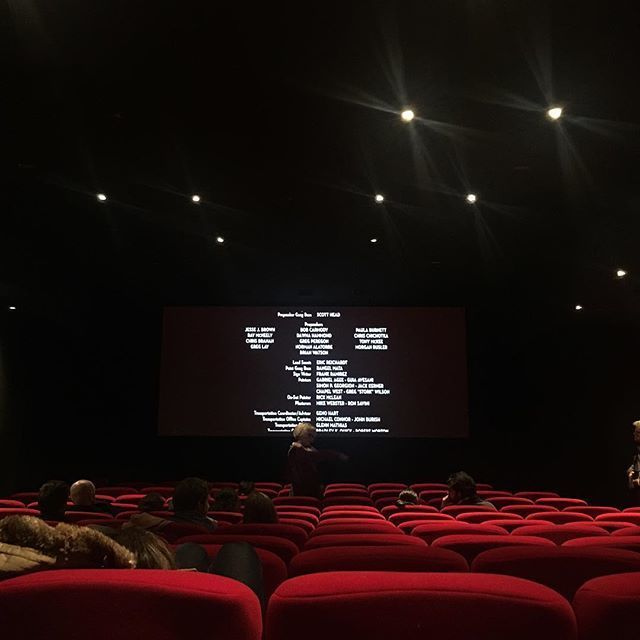
Have you ever noticed how Netflix always seems to recommend the perfect movie for you?

I’m a big fan of movies, and I’m always amazed at how accurately Netflix suggests films that match my taste.

This is all thanks to a personalized movie recommendation system.

Behind the scenes, Netflix uses huge datasets containing movies, ratings, and user preferences to figure out what each viewer might enjoy next.

In this blog, we’ll explore how personalized movie recommendations are built with data science—the same technology that powers platforms like Netflix, Amazon Prime, and Disney+.


How It Works

Netflix deals with massive datasets. By analyzing patterns in what people watch, like, and skip, data-science algorithms learn your interests and predict which titles you’re most likely to love.

Here’s a simplified step-by-step look at how a basic recommendation engine can be built.

Step 1 – Import Libraries


The process begins by importing the necessary Python libraries such as pandas, numpy, or scikit-learn, which help with data handling and machine-learning tasks.


Step 2 – Data Cleaning


The raw dataset often contains empty spaces, missing values, or duplicate records.

Cleaning the data means removing duplicates and filling or dropping missing values so that the dataset becomes structured and reliable.


Step 3 – Title Cleaning


Movie titles often include symbols or extra text such as dashes, brackets, or release years (for example, Toy Story (1995)).

Cleaning the titles—e.g., converting Toy Story (1995) to Toy Story 1995—makes searching and matching easier.


Step 4 – Tokenization & Vectorization

Since titles and descriptions are text, they must be converted into a numerical form that a machine can understand.

This is done through tokenization (breaking text into words) and vectorization using techniques like TF-IDF (Term Frequency–Inverse Document Frequency).

Vectorization can also include n-grams, which combine words into pairs (e.g., “Toy Story” or “Story 1995”) to capture more context.


Step 5 – Calculate Similarity


Finally, the system measures similarity between movies or between users.

For example, if two users like many of the same films, the algorithm assumes they share similar taste.

By comparing these similarity scores across all users and movies, the system recommends the most relevant titles.


Real-World Examples

We use recommendation systems every day on platforms like Netflix, Disney+, Amazon Prime Video, and many more.


Challenges & Future

Even though movie recommendation systems are powerful, they still face some real-world issues and exciting opportunities for growth.

Challenges:-

  1. Cold Start – When a new user joins or a new movie is added, there isn’t much data yet, so it’s hard to give good recommendations at first.
  2. Sparse Data – There are millions of movies and users, but most people only rate or watch a few. This leaves a lot of empty spaces in the data, which makes learning harder.
  3. Scalability – Platforms like Netflix handle huge amounts of data, so the system needs to work fast even when millions of users are watching at the same time.
  4. Privacy – The system learns from what we watch, which means it collects personal viewing habits. Protecting this data is very important.


Future:-

  1. Hybrid Models – Using both collaborative filtering and content-based methods together to give more accurate and smarter suggestions.
  2. Example: Netflix uses a hybrid model that mixes collaborative filtering with content-based methods.
  3. Context-Aware Recommendations – Making recommendations based on things like time of day, device, or even mood, so the suggestions feel more natural.
  4. Explainable AI – Showing why a movie is recommended, like “Because you liked Stranger Things or animated movies.”
  5. Real-Time Personalization – Updating recommendations instantly as a user watches, skips, or rates a movie.


Conclusion

From data cleaning to vectorization and similarity calculations, every step helps turn raw movie data into smart, personalized suggestions.

This is how platforms like Netflix turn data science into a magical experience where your next favorite film is just a click away.


Comments ()


Sign in

Read Next

10 Reasons to Date a South Indian Girl

Blog banner

A MODERN OPERATING SYSTEM

Blog banner

Deadlock and Starvation in an Operating System

Blog banner

Visualization in Data Science

Blog banner

Guidelines for a low sodium diet.

Blog banner

Beatbox

Blog banner

Mesh Topology

Blog banner

undefined

Blog banner

Ransomware

Blog banner

What is process

Blog banner

rupee

Blog banner

Modern Operating System - Suren Kotian

Blog banner

virtual machines and virtualization

Blog banner

Pro-Tips On How To Keep your Foot Healthy

Blog banner

Direct Memory Access

Blog banner

How to kiss

Blog banner

Hello World

Blog banner

You'll get to know about Pankaj Negi

Blog banner

Building a Simple Doctor Appointment System in Common Lisp

Blog banner

Dangers of Using Public WiFis

Blog banner

Not anti-social, but pro-solitude

Blog banner

MEMORY MANAGEMENT

Blog banner

Technological Advancement

Blog banner

Health and fitness in technology

Blog banner

The War With Cold On Earth

Blog banner

Top 5 Tech Innovations of 2018

Blog banner

Memory Management in an Operating System

Blog banner

Best password managers: Reviews of the top products

Blog banner

Buffering

Blog banner

Memory Management Techniques

Blog banner

Digital marketing spotlight “Dove’s Real Beauty Campaign”

Blog banner

What is time ? The term which has astonished Scientists

Blog banner

note taker app

Blog banner

Tomato Butter Sauce with Bucatini

Blog banner

Social Media Marketing Trends 2022

Blog banner

Modern Operating Systems.

Blog banner

Man VS Nature

Blog banner

operating system

Blog banner

NodeJs

Blog banner

Docker Framework

Blog banner

Principles of Concurrency

Blog banner

Cache memory

Blog banner